
Entry tariff:
No formal qualifications required, please see Entry Requirements section below.
Start date(s):
September 2026
Clearing
CLEARING 2026
Discover a dynamic, welcoming programme that builds lifelong confidence and skills through engaging study of Christian theology, church history, and the Bible.
When you graduate you will receive a Certificate of Higher Education, equating to 120 credits at Level 4, providing a solid foundation for further study or career advancement in various fields such as church leadership, education, counselling, and social services.
This is theology that moves beyond abstract ideas. You will learn how Christian belief has developed across history, how biblical texts are interpreted, and how theology shapes everyday life, mission and service. Throughout the year, you will develop confidence in your abilities, deepen your understanding of Christian faith, and grow as an engaged and reflective learner.
You will be taught by highly qualified staff from a range of Christian traditions who bring together academic expertise and years of experience in ministry and practice.
Top modern university in London in Theology & Religious Studies
(Complete University Guide 2025)

Theology and Religious Studies ranked 1st in London in all categories (NSS 2024)
National Student Survey 2024

Develop the knowledge and skills to effectively study and teach the Bible, Christian Theology and Church history.
You will learn how to:
- Draw out the original meanings of the biblical texts
- Interpret and teach the Bible for the church today
- Study and interpret church history, drawing out valuable lessons for today’s world
- Explain and teach important doctrines such as the Atonement, the Trinity, the Holy Spirit and more.
Similar course available include:
Modules
This module introduces you to the Hebrew Bible through the lens of Narrative Theology, emphasizing the literary and theological coherence of the textual corpus. The module explores key themes such as the narrative unity of the texts, theological motifs, genre, and hermeneutical strategies. You will engage with major historical developments - from the rise of the monarchy to the exile and the intertestamental era - while considering how these shape Israel's identity and its understanding of God. Special attention is given to the prophetic vision, the emotional world of YHWH, and the human experience of alienation. Approaching the corpus as a unified literary work, you are invited to interpret the texts as part of an overarching theological drama revealing God’s character, covenantal purposes, and redemptive mission.
This module offers an in-depth exploration of the New Testament, examining its texts within the historical, literary, religious, and cultural contexts of first-century Judaism and the wider Graeco-Roman world. You will engage critically with the diversity of voices in the New Testament, considering what these texts reveal about early Christian beliefs, practices, and community life. Key writings—including the Gospels, Acts, Pauline and general epistles, and Revelation—are studied with attention to their distinctive themes, genres, and theological aims. The module also explores the challenges faced by early Christian communities, such as empire, ethnicity, gender, and poverty. Emphasising both academic analysis and practical application, the module encourages you to work collaboratively in drawing insights from the texts for contemporary teaching and preaching contexts.
This module introduces you to the major contours of Christian history through five guiding questions: 1) What does the church teach? 2) Who is the church? 3) Where is the church? 4) How does God speak to the church? and 5) How does the church renew itself? Rather than surveying every historical event, the module offers an interpretive framework that helps you understand how these foundational questions have shaped Christian identity, doctrine, and mission across time and cultures. Emphasising global diversity and theological development, the course invites students to explore their own theological formation within the broader historical narrative of the church—from its apostolic beginnings to contemporary expressions—highlighting moments of doctrinal debate, regional growth and decline, reform movements, and ongoing renewal.
This module orientates you to the study of Christian theology, framing the whole programme and this module in terms of your own theological formation. Academic study skills are introduced as part of this formative process. You will learn about key doctrines of the Christian church including critical issues in their development, assessed through a doctrine portfolio. You also learn to be reflective about their formation over the year culminating in an end of year reflective assessment that prepares you for more formal forms of theological reflection at Level 5.
These are the current planned modules on this course and may be subject to change.
Careers and future pathways
As a graduate of Biblical Studies and Theology (Certificate of Higher Education), you will gain a deeper knowledge of Biblical Studies & Theology.
This will enhance your service as:
- Deacons, elders, council members, or administrators in local churches
- Bible Study leaders and Sunday School teachers
- Worship leaders
- Children’s and youth workers
- Missionaries
- Counsellors
- Social service workers
- Charity and third sector workers
- Educators working in schools affiliated with a church.
You will also gain highly transferable skills valued across many professions, including critical thinking, clear communication, collaboration, ethical reflection and independent research. Whether you are preparing for ministry, exploring a new direction, or deepening your theological understanding for your current role, this course will help you engage confidently and thoughtfully with the challenges of contemporary Christian life.
This course of study is also an excellent option if you are considering careers in Christian service, but may not be ready to commit to a longer course of study. After completion of this course, you can easily transition into the FdA/BTh programme.
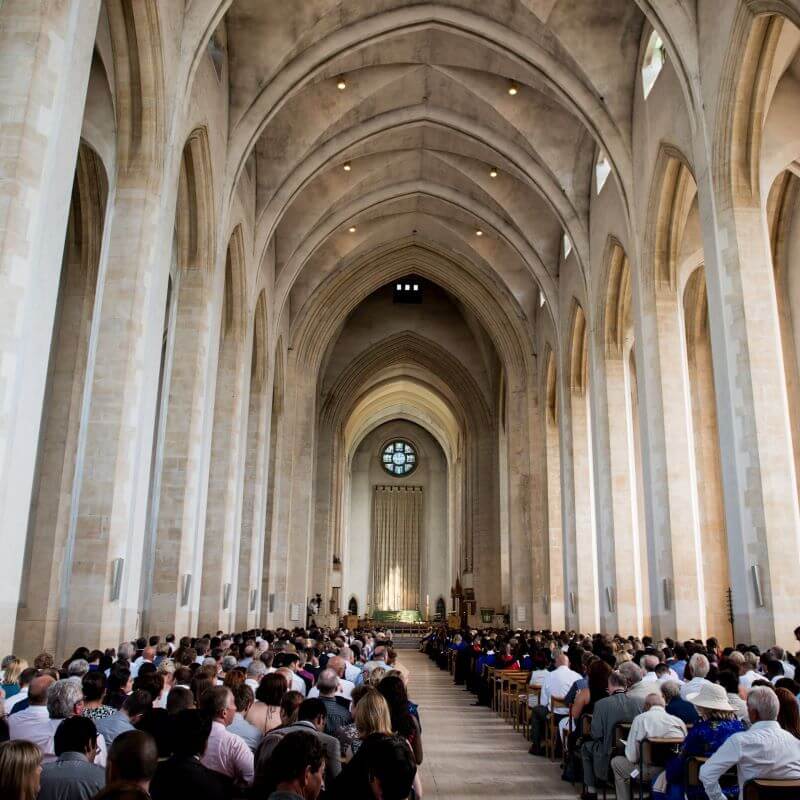
The Student Futures team is here to support you throughout your time at Roehampton and beyond.
They offer services tailored to your needs, helping you take confident steps towards your future.
You’ll have access to a wide range of career workshops and events, where you can engage with employers and develop the skills you need to succeed in the workplace.
These opportunities will help you build your CV, prepare for interviews, and connect with successful Roehampton graduates who are thriving in their careers. You’ll also be able to engage with our partners across London and beyond.
Wherever you want to go in the future, you'll be preparing for the world of work from your very first day.
Learning and assessment
How you'll learn:
The programme is built around flexibility, enabling you to study while continuing with work, church or ministry commitments.
You will learn through a rich combination of lectures, seminars, group discussion and guided independent study. The focus of the year is “Building Foundations,” helping you develop both academic skills and a grounded understanding of theology, biblical studies and Christian history.
You will:
- Learn the core methods and sources of theological and biblical study
- Explore the diversity of Christian traditions and perspectives
- Engage with historical texts and contemporary theology
- Learn alongside others in a collaborative and supportive community
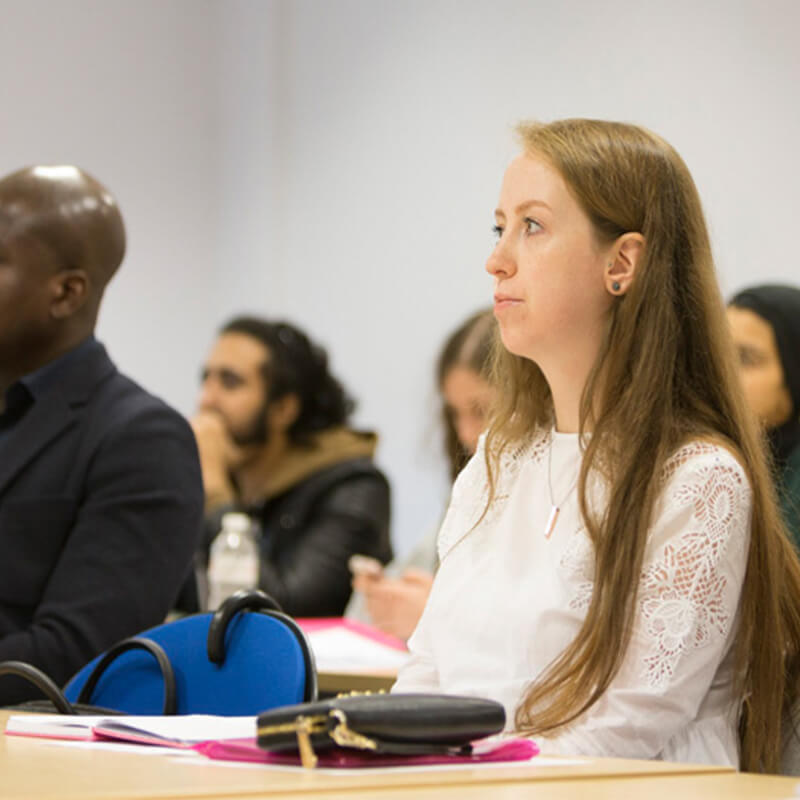
The blended learning model allows you to stay connected wherever you are, while on-campus sessions provide space for deeper engagement, discussion and community building. Throughout the course, you will be encouraged to ask questions, reflect critically, and explore how theology speaks into real-world contexts.
How you'll be assessed:
Assessment is designed to support your learning, build your confidence and help you develop practical theological skills.
Rather than relying on a single assessment type, you will complete a variety of tasks across the year that encourage steady progress and ongoing reflection.
You can expect assessments such as:
- Short essays and written assignments
- Reflective work linking theology with practice
- Research-based tasks
- Collaborative and discussion-focused activities
These assessments will help you develop academic writing, analysis, research skills and clear communication. You will receive constructive feedback throughout the year, enabling you to grow as a learner and to build tools for lifelong learning.
Our excellent NSS scores reflect the high levels of student satisfaction on this programme. By the end of the course, you will leave equipped with strong foundations in biblical studies and theology, greater confidence in your abilities, and the skills to continue learning, serving, and leading well.
Your tutors
Open days
Get a real taste of our campus, community and what it’s like to study at Roehampton
Entry requirements
There are no formal entry requirements and you will not be expected to have any academic or theological background although, where appropriate, those who have already done some church-related study will be welcome.
Applicants interested in joining advised to contact mtenquiries@roehampton.ac.uk to receive additional information and guidance on how to apply for September entry. All applicants are required to attend an interview.
Looking to work out your UCAS points or find out about our entry requirements? Find out more.
When we consider applications to study with us, we form a complete view of your achievements to date, and future potential, and can offer flexibility in entry requirements. Find out more about our Contextual Offer scheme.
General entry requirements
There are no formal entry requirements and you will not be expected to have any academic or theological background although, where appropriate, those who have already done some church-related study will be welcome.
Applicants interested in joining advised to contact mtenquiries@roehampton.ac.uk to receive additional information and guidance on how to apply. All applicants are required to attend an interview.
Looking to work out your UCAS points or find out about our entry requirements? Find out more.
When we consider applications to study with us, we form a complete view of your achievements to date, and future potential, and can offer flexibility in entry requirements. Find out more about our Contextual Offer scheme.
General entry requirements
Apply now
Applying to Roehampton is straightforward, and we're here to guide you through every step and answer any questions you might have.
If you currently live in the UK or Ireland, you can apply directly through UCAS. Check out our UCAS application guide for all the information you need.
If you live in the UK and already have all your exam results, you can apply to us directly.
If you’re an international student, you can apply to us directly or add Roehampton as a choice on your UCAS application. Check out our guidance for international students for more information.
If you have any questions or need some support, reach out to us.
Fees and funding
UK students
Tuition fees
| Entry date | Undergraduate Year 1 |
|---|---|
| September 2026 | £9,790 |
Prices shown are for the first year of your degree.
Funding your studies
We also provide other ways to support the cost of living, including on-campus car parking, hardship support and some of the most affordable student accommodation and catering in London.
International students
Tuition fees
| Entry date | Undergraduate Year 1 |
|---|---|
| September 2026 | £17,628 |
Prices shown are for the first year of your degree.
Funding your studies
We also provide other ways to support the cost of living, including on-campus car parking, hardship support and some of the most affordable student accommodation and catering in London.

Need help or advice before applying?
Arts, Humanities and Social Sciences
Integrating the creative dynamism of arts and digital industries with the deep-rooted traditions of humanities and social sciences.