
You'll need:
2026/27 entry: Call 0300 303 8320 to find out if you are eligible for this programme in Clearing
International Foundation Pathway:
64 UCAS (or equivalent)
IELTS: 5.5
When we consider applications to study with us, we form a complete view of your achievements to date, and future potential through our contextual offers.
UCAS code:
H220
H22F (if choosing Foundation Year)
Start date(s):
September 2026
September 2027
Clearing
CLEARING 2026
Open for Clearing
The BEng Civil and Environmental Engineering allows you to develop the knowledge and skills to design resilient infrastructure that responds to the challenges of climate change.
You will combine core civil engineering principles with environmental awareness, learning how to model, analyse risk, and create adaptive solutions that enhance the long-term performance of infrastructure projects.
You will build a strong foundation in essential engineering concepts, including mathematics, materials, soils, and site engineering, while gaining practical experience through lab-based learning and real-world problem solving. As you progress, you will deepen your understanding of structures, fluid mechanics, and geotechnics, applying your knowledge to increasingly complex engineering challenges.
Accreditation
Accreditation will be sought from the Engineering Council via the Joint Board of Moderators (JBM) after the first student output is available.
Throughout the course, you will:
Develop core skills in civil and environmental engineering design and analysis
- Develop core skills in civil and environmental engineering design and analysis
- Learn how to model systems and assess risk in infrastructure projects
- Explore soil mechanics, fluid mechanics, and structural design
- Apply engineering principles to real-world and interdisciplinary challenges
- Build problem-solving, teamwork, and critical thinking skills
You will gain hands-on experience through practical sessions and team-based projects, where you will tackle realistic engineering problems and develop confidence in applying your knowledge. As your studies progress, you will take on larger, more complex projects that reflect the collaborative and interdisciplinary nature of the engineering profession.
A key focus of the course is climate resilient infrastructure, where you will explore how engineers design and manage systems that remain functional and sustainable under changing environmental conditions. You will also complete an applied research project on a current environmental issue, developing skills in data analysis, ethical decision making, and critical evaluation.


By the end of your degree, you will be equipped to approach complex engineering challenges with confidence. You will graduate with the technical expertise, practical experience, and problem-solving ability needed to contribute to sustainable infrastructure and make a meaningful impact in the field of civil and environmental engineering.
Top 3 in London for student satisfaction
Complete University Guide 2026

#1 in London for student life
WhatUni Student Choice Awards 2026

Modules
Module overview:
The aim of the module is to introduce the foundational principles of statics, dynamics and mathematics for engineering. It explores the different types of stresses that materials undergo and how these materials respond under the influence of such stresses. The module extends its focus to statically determinate structures, and their behaviour under various stress conditions. Additionally, a crucial aspect covered is the concept of structural stability, exploring the factors that contribute to the equilibrium and robustness of structures.
The module places emphasis on the development of conceptual understanding of the physical world, including engineering artefacts and natural environmental processes, through the language of mathematics. It aims to reinforce and extend your understanding of core mathematical concepts used in the solution of engineering problems. You will develop proficiency in mathematical methods critical for engineering analysis and problem-solving. Recognising the pivotal role of quantitative reasoning in engineering, this module is designed to provide you with the necessary tools to analyse, model, and solve engineering problems
Furthermore, the module goes beyond theoretical frameworks and introduces practical considerations by addressing a variety of commonly used structural forms. Both qualitative and quantitative analyses are employed to describe the behaviour of these structures. Emphasis is placed on understanding complex states of stress within solids, and the intricacies of how materials respond when subjected to diverse and challenging stress patterns.
A significant facet of the module involves an exploration of the failure mechanisms inherent in materials. This includes an examination of the failure modes exhibited by both ductile and brittle materials. By scrutinising these failure mechanisms, the module equips you with the knowledge necessary to design structures that not only withstand various stresses but also maintain their integrity and safety over time. The teaching will include real life example of failure. The module serves as a gateway to the understanding of the principles governing the behaviour of structures under different loading conditions, and preparing you for the challenges of structural engineering.
How you'll learn:
You will learn through lectures, seminars, examples classes, experimental laboratories and practical applications. Students will be assessed through in-class tests and laboratory activities. You will be introduced to risk assessments for safe working practices in laboratories.
Module overview:
This module has three distinct component parts: land surveying, drawings, and measurement. Through hands-on experience with professional surveying equipment and real-world fieldwork applications, you will develop industry-relevant competencies required in construction management, civil engineering, and building surveying roles.
In the first component, you will gain practical knowledge of surveying instruments used in industry, learning to conduct surveys, interpret results, and apply mathematical techniques such as trigonometry and coordinate geometry. By working in teams, you will simulate real-life surveying tasks, improving your ability to work collaboratively on-site, a key employability skill for surveying and construction professionals.
The second component develops your technical drawing abilities, both manual and digital (CAD, GIS, 2D/3D modelling), enabling you to create and interpret technical plans used in engineering and architecture. These skills are highly sought after in design, construction, and infrastructure projects.
The third component focuses on quantity measurement and costing, crucial for building surveyors and construction managers. You will learn to perform take-offs from drawings, apply measurement conventions, and use digital tools for managing construction information, such as BIM (Building Information Modelling).
This module prepares you for future careers in the built environment sector, enhancing problem-solving, digital proficiency, teamwork, and analytical thinking, all of which are essential for professional success.
How you'll learn:
This module is delivered using a practice-based, experiential learning approach, integrating hands-on fieldwork, problem-solving activities, and industry-standard software training.
Module overview:
The aim of this module is to provide you with a comprehensive understanding of materials used in civil engineering and construction. The emphasis is on knowledge and understanding of the physical properties and embodied carbon in materials including environmental and sustainable considerations relating to their source, manufacture, use and disposal. Delving into the composition and properties of a diverse array of materials, the module offers an holistic exploration of the building blocks that form the backbone of construction practices with an awareness of the environmental impact.
You are introduced to the characteristics of various materials, ranging from traditional and modern materials through modern materials to minerals, rocks, and geological structures. The exploration extends beyond a surface-level understanding, aiming to provide students with appreciation of how each material contributes to the structural and functional aspects of civil engineering projects while considering their environmental footprint.
How you'll learn:
A significant component of the module involves hands-on experience through testing procedures, where you will actively engage in experiments to evaluate the properties of materials. Importantly, sustainability metrics are integrated into these evaluations, ensuring that you gain insights into the environmental impact and life cycle considerations of the materials that you study.
You will learn through lectures, seminars, examples classes, in-class tests, experimental laboratories and practical applications and will be assessed through project and laboratory activities. You will be introduced to risk assessments for safe working practices in laboratories.
Module overview:
This is the first in a series of Interdisciplinary Design Projects that continue in each year of the programme. The module integrates the skills and knowledge acquired on the programme to date. However, it goes beyond that in terms of integration in as much as you will work within interdisciplinary groups from across the SETEC undergraduate programmes. Further, as the programme gains new cohorts, you will also work with students in ‘vertical’ cross-cohort disciplinary groups where you are given the opportunity for peer-to-peer learning.
The aim is to begin developing skills in design through a series of design tasks that require the development of a range of options that would satisfy the design problem, and introduce the ways that professionals work collaboratively in design. These projects will usually be related to one of the key contexts adopted by SETEC, e.g. the UN Sustainable Development Goals and industry collaboration. The modules, and the ensuing design modules provide the basis for a continuing process of self-reflection and personal development.
A design brief will be set that introduces you to challenges that provide context for design, construction and operation/maintenance of built environment artefacts. You will work in inter-disciplinary (and vertical cohort disciplinary where appropriate) teams, to identify and produce a concept design. You will learn about creativity in design, effective processes for rationalising ideas and solutions, how to integrate and balance professional roles and perspectives, and effective teamwork and communication of possible design solutions.
It will involve elements of design including form, function, space texture, balance, rhythm, emphasis, proportion and unity. It will involve producing designs expressed in hand drawings and computer aided drawings and physical models. It will also require plain language concise descriptions of the problem, the design process and the outcome design.
How you'll learn:
There will be taught elements by either lecture or seminar / workshops which include an introduction to ethics, equality and diversity, project planning, site layout, risk management, environmental assessment, Health and Safety management techniques, searching for relevant literature, summarising literature, writing of technical prose and critical thinking.
These are the current planned modules on this course and may be subject to change.
Module overview:
This module aims to provide a comprehensive exploration of soil mechanics and its applications in Civil Engineering. The module is structured to develop understanding of the fundamental principles governing site investigation methodologies, laboratory testing of soils, and hence soil behaviour.
You will engage in both desk-based geotechnical studies and practical laboratory sessions. Emphasis will be placed on soil sampling techniques and the interpretation of site investigation reports and hands-on experience in assessing various soil properties. You will gain insights into the real-world implications of soil behaviour and its significance in Civil Engineering applications. The module covers the bearing capacity design of shallow foundations and their settlement. The skills acquired in this module are directly relevant to the challenges faced in the field of geotechnical engineering, preparing you for future professional practice.
How you'll learn:
The module will be delivered through a mix of lectures, laboratory sessions, case studies, problem classes and practical fieldwork. Guest lectures from industry experts may be included to provide insights into the practical applications of geotechnical engineering. You will be required to comply with risk assessment for working in the geotechnics laboratory.
Module overview:
This module covers structural design processes in concrete, masonry, timber, and steel, emphasizing elastic structural analysis methods and virtual work. You will gain proficiency in analysing elastic indeterminate structures and understanding loadings and structural stability. The module covers use of matrix methods and stiffness methods.
Practical application is emphasized through hands-on exercises and projects. The module links to Interdisciplinary Design Project 2, enabling you to apply theoretical and analytical skills in a real-world context. It includes lectures, problem classes, practical work, and guest lectures from industry experts.
How you'll learn:
You will learn through lectures, seminars, examples classes, experimental laboratories and practical applications. You will be assessed through in-class tests and laboratory activities. You will be introduced to risk assessments for safe working practices in laboratories.
Module overview:
This module will provide you with a comprehensive understanding of fluid mechanics, focusing on the principles that govern fluid behaviour and their applications in civil engineering. You will develop knowledge of fluid statics and dynamics, including the equations that describe fluid flow and their use in designing pipes, open channels, and hydraulic machines.
You will explore fluid mechanics principles in real-world engineering contexts, learning how to analyze fluid behavior and apply theoretical concepts to practical scenarios. The module also focuses on designing systems for fluid transport, emphasizing problem-solving, critical thinking, and technical skills essential for professional engineering roles.
How you'll learn:
By engaging in laboratory work, computational modeling, and site visits, you will apply your knowledge to real-world case studies. Assessment will be through in-class tests and laboratory reports, ensuring that you can demonstrate both conceptual understanding and practical problem-solving skills.
Module overview:
In this module you will apply the knowledge and skills acquired at Level 4 and during Level 5 to a multi-faceted design problem of a building or part of one, develop holistic design thinking, further embed approaches to design that are sustainable and carbon neutral, in particular novel materials, timber and reused or recycled steel and carbon accounting for construction, and to continue with self-reflection and collaborative practices with other disciplines. Further, the project will usually be related to one of the key contexts adopted by SETEC, e.g. the UN Sustainable Development Goals and industry collaboration. Further, where appropriate, you will also work with other students in ‘vertical’ cross-cohort disciplinary groups where you are given the opportunity for peer-to-peer learning.
The content is delivered in the context of a design project in which you play the role of a professional within your discipline within a broader design team. This module employs an experiential learning approach, integrating problem-based learning (PBL) and collaborative, interdisciplinary teamwork to simulate professional practice.
You will present your design appropriately using hand-drawn sketches, computer generated graphics, computer aided drawings, physical models, calculations, specifications, and bills of materials/ quantity. You will be developing your knowledge of computer assisted design and engineering in context and its value in terms of optimisation and parametric design.
How you'll learn:
The project has an individual component and a groupwork component. A combination of tutorial and design studio sessions will be used to generate the designs and track progress.
You will continue your planning and recording of self-learning and development as the foundation for lifelong learning / CPD. This will be continued within each Interdisciplinary Design Project at each level of the course.
These are the current planned modules on this course and may be subject to change.
This course offers all students the option of a one-year paid work placement, to boost your employability even further. If you choose this route, you will take the placement following year two of your course, and then return to complete your degree.
Why take a placement?
A placement year is the perfect opportunity to gain valuable work experience, to build on the career skills we will teach you on this degree. The connections you make on the placement will improve your career prospects further, and equip you with the skills you need to secure graduate-level employment.
How we support you
The University's Placement and Work Experience Team are experts at helping you to secure a placement. They will work closely with you from the start, helping you research potential employers, discover placement opportunities, create and pitch your CV, and will coach you to perform well in interviews. We aren't able to guarantee a placement, but our sector-leading advisors will give you the best possible chance of securing one.
Find out more about how we'll support you
We understand that your plans might change once you start your programme. If you decide not to do a placement, you will have the option of completing the three year version of your programme.
Whatever your choice, you will have access to many opportunities for work experience through our Placement and Work Experience Team, and access to face-to-face and 24/7 online careers support.
In this module you will explore how infrastructure can be designed, assessed and managed to remain resilient under changing climate conditions. You will develop skills in climate risk and vulnerability assessment, digital and geospatial analysis, and climate impact evaluation using tools such as GIS and emerging modelling approaches. Through practical methods and real-world case studies, you will examine adaptive design strategies, sustainable materials, renewable energy integration and nature-based solutions. You will also consider policy and global frameworks that support resilient, low-carbon infrastructure and climate-responsive development across UK and international contexts for sustainable planning and future engineering practice in diverse settings.
Module overview:
The Further Structural Analysis module explores more advanced structural analysis techniques. The primary aim is to cultivate the necessary knowledge, understanding, and skills to analyse and solve complex problems associated with multi-variable structural systems. This includes an in-depth focus on both statically determinate and indeterminate structures, with an extended emphasis on the analysis of plates.
Emphasis is placed on the application of theoretical knowledge to real-world engineering problems. You will engage in practical problem-solving exercises, case studies, and a design project that requires the application of advanced structural analysis techniques to address complex engineering challenges.
The module introduces you to the Finite Element Method (FEM), a powerful numerical technique widely used in structural engineering. You will not only understand the theoretical foundations of FEM but will also gain practical experience through the use of finite element analysis software, preparing them for sophisticated analysis and design tasks. The module also extends your knowledge to include structural dynamics.
The module also covers design processes for foundations, retaining walls, and slopes. The primary objective is to equip you with in-depth knowledge and skills essential for designing resilient, effective and stable support systems within the broader context of civil engineering projects. This module builds upon knowledge acquired in earlier modules, specifically the Level 5 structures and soil mechanics modules.
How you'll learn:
The module will be delivered through a mix of seminars, workshops, and site visits. Practical design exercises and case studies will be integral to the learning process, allowing you to apply theoretical concepts to real-world scenarios. Interaction with industry practitioners and guest lecturers will provide additional insights.
Module overview:
This module provides you with the opportunity to independently investigate a selected topic of interest in a built environment related issue, and the scope may include, if appropriate, the development of a design. The design option is for students of who would like to carry out an individual design project and is primarily aimed at students who are enrolled on programmes that involve some level of design discipline. You will need to take responsibility for managing your time, identifying objectives and follow a systematic approach to explore, and possibly solve, a problem, or generate a design. It includes the production of a report of the investigative project.
You will select a topic for research or design provided by prospective supervisors, or they may propose a topic for research to the module leader who will seek a suitable supervisor. Proposed topics may be the subject of further discussion and development before they are mutually agreed by you and your proposed supervisor.
The project will typically be of an investigative nature, exploring and extending your knowledge of the chosen subject within the context of the construction industry. A design project will also require a good degree of investigation on your part. You are expected to demonstrate an understanding of fundamental principles of research, follow research ethics and appropriate methodologies for collecting and analysing primary and / or secondary data and communicate your findings to a professional standard. You will be required to submit an application for ethical approval for the research prior to any primary data collection involving human subjects. You will also need to develop a risk assessment for all practical work either in the field or laboratory.
How you'll learn:
There will be a programme of lectures and seminars at the beginning of the module to introduce you to research techniques and appropriate methodologies. This will include coverage of appropriate statistical techniques that you may need to adopt. Online resources will be provided to support the investigation. Specialist librarian support will be provided to help you with literature searches and use of software for citing articles and providing their bibliographies in a reference list. You are expected to show considerable initiative throughout the duration of the module and schedule supervision meetings with their supervisors.
Module overview:
In this module, you will further develop your ability to design larger-scale built environment artefacts of a more complex scale for a specific development site. The projects will usually be related to one of the key contexts adopted by SETEC, e.g. the UN Sustainable Development Goals and industry collaboration. You will also work with students in ‘vertical’ cross-cohort disciplinary groups providing additional opportunity for peer-to-peer learning.
You will conduct research on the background of the site and explore developments in design and construction practices and techniques. It will therefore contain research methods teaching, also required for the Investigative Project. This instruction will build on that provided as part of Integrated Design Project 1 and 2. You will develop your understanding and application of project planning, cost estimation, risk assessment, ethics, sustainability, and Equality, Diversity, and Inclusion (EDI). It will also cover matters connected with search and retrieval of academic and grey literature, constructing text which summarises current known knowledge, critical thinking, the construction of technical reports, and writing.
How you'll learn:
You will work collaboratively to develop built environment proposals for a concept scheme at a specified development site, which may include geotechnical, water design and transport (such as pedestrian and cycle access within the perimeter). Working in teams, you will be presented with a brief that they will need to interpret, and where necessary challenge, in order to develop a programme of integrated activity.
These are the current planned modules on this course and may be subject to change.
This course offers a foundation year, which takes place at the beginning of your studies. Studying a foundation year will give you academic and practical experience, and a strong introduction to your subject, ensuring you succeed on your undergraduate degree.
30 credits
You will develop your core academic and integrated English language skills of speaking, listening, reading and writing. You will become familiar with key academic skills and concepts, such as referencing methods and awareness of academic integrity and tone. You will apply these skills and knowledge to both broad topics and also your chosen subject pathway.
Teaching and learning
You will be required to actively engage in on-campus learning for up to 10 hours a week.
You will be taught through a full range of teaching and learning methods, which include lectures, seminars, workshops, discussion groups, group directed tasks and presentations. This will enable you to learn from your peers and tutors in both structured and information settings.
You will be encouraged to think creatively about your approach to learning and discussions with your peers. You will also have access to recordings, resources, links and signposting through Moodle to enrich your learning.
Assessment
You will be assessed through group and individual presentations, comparative and reflective essays, multiple choice exams, coursework and reports, oral exams, portfolios, case studies and blogs.
30 credits
You will develop your core academic and integrated English language skills of speaking, listening, reading and writing. You will become familiar with key academic skills and concepts, such as referencing methods and awareness of academic integrity and tone. You will apply these skills and knowledge to both broad topics and also your chosen subject pathway.
Teaching and Learning
You will be required to actively engage in on-campus learning for up to 10 hours a week.
You will be taught through a full range of teaching and learning methods, which include lectures, seminars, workshops, discussion groups, group directed tasks and presentations. This will enable you to learn from your peers and tutors in both structured and information settings.
You will be encouraged to think creatively about your approach to learning and discussions with your peers. You will also have access to recordings, resources, links and signposting through Moodle to enrich your learning.
Assessment
You will be assessed through group and individual presentations, comparative and reflective essays, multiple choice exams, coursework and reports, oral exams, portfolios, case studies and blogs.
30 credits
You will develop your research, numeracy and information technology skills. You will investigate the difference between primary and secondary research, conduct your own research project and demonstrate your findings through data analysis. You will also develop your awareness of equality, diversion and inclusion in the UK, through a real-world issue; discrimination in the workplace.
Teaching and learning
You will be required to actively engage in on-campus learning for up to 10 hours a week.
You will be taught through a full range of teaching and learning methods, which include lectures, seminars, workshops, discussion groups, group directed tasks and presentations. This will enable you to learn from your peers and tutors in both structured and information settings.
You will be encouraged to think creatively about your approach to learning and discussions with your peers. You will also have access to recordings, resources, links and signposting through Moodle to enrich your learning.
Assessment
You will be assessed through group and individual presentations, comparative and reflective essays, multiple choice exams, coursework and reports, oral exams, portfolios, case studies and blogs.
30 credits
This module focuses on an in-depth exploration of applied psychology, drawing on foundational theories and models that explain human behaviour. You will engage with the issues and debates around some of the core psychological concepts, such as prejudice, stereotyping, group dynamics, and conformity, gaining a broad understanding of what influences human behaviours.
The module introduces the bio-psycho-social model within health psychology, providing a holistic framework for understanding health-related behaviours. You will gain a knowledge of how different psychological theories and models can be applied to understand the development of risky health behaviours and can be applied to design effective health intervention strategies.
You will learn the skill of collaborative group work, which is an integral part of the module, encouraging you to apply your knowledge of psychological theories to analyse and present a case study on risky health behaviour. You will also develop the skill of critical analysis, integrating various theories and models in psychology to explain risky health behaviour and suggest intervention programs.
Teaching and learning
The teaching delivery for each module consists of one, one-three-hour lecture and one, two-hour seminar per week. You will learn through a blend of lectures and interactive sessions, case studies and group presentations.
There will be an additional 30 minutes of online support per week. This will consist of individual tasks such as quizzes, posting on discussion forums, watching videos and taking notes, and reading articles or chapters.
Assessment
This module will be assessed using a written assessment and a group presentation.
50% - written assessment, composed of two parts; essay and self-reflection. You will write an essay on your knowledge of at least two psychological theories or models to explain why people develop risky health behaviours and propose and evaluate intervention strategies. You will reflect on your experience and learning journey as you prepared for and wrote the essay.
50% - group presentation, where you will apply knowledge from psychology theories to plan health interventions on risky health behaviour.
30 credits
This module focuses on the different perspectives available in psychology to explain human behaviour.
You will get the opportunity to explore methods of scientific thinking and reasoning within a Psychology context in an enquiry-based way. Problem-based learning and blended learning (combines online and face-to-face time) approaches will facilitate deep, experiential learning.
You will gain knowledge on what scientific thinking is, how to distinguish this from pseudoscience and how the scientific cycle enquiry can be applied to the various perspectives in psychology.
You will be encouraged to explore how different perspective in psychology can explain human behaviour, scientific argumentation and ethical working practices in relation to current scientific topics as reflected in news reports, recent academic publications and historical case studies. You’ll gain the skill of critical thinking and how to apply concepts from psychology to explain everyday behaviour, as well as poster presentation and public speaking.
Teaching and learning
The teaching delivery for each module consists of one, one-three-hour lecture and one, two-hour seminar per week. Lectures will introduce the scientific basis of knowledge and research methodologies in the context of Psychology and empower you to distinguish between science and pseudoscience, while seminars will consist of individual and group activities on the weekly topics.
There will be an additional 30 minutes of online support per week. This will consist of individual tasks such as quizzes, posting on discussion forums, watching videos and taking notes, and reading articles or chapters.
Assessment
This module will be assessed using a group poster presentation and written assessment.
40% - group poster presentation, you will compare and contrast any two perspectives on psychology.
60% - written assessment, you will write a critical essay on how pseudoscience differs from science.
These are the current planned modules on this course and may be subject to change.
Careers
The BEng Civil and Environmental Engineering programme is designed to meet professional standards and give you a strong vocational foundation, preparing you for a wide range of careers. You could pursue:
- Civil and environmental engineering roles
- Site engineering positions
- Engineering design opportunities
You will be well placed to work with civil engineering consultancies, contractors, or client organisations. With further training and practical experience, you can build the foundation to become a chartered civil and environmental engineer, ready to deliver innovative and sustainable engineering solutions.
The Student Futures team is here to support you throughout your time at Roehampton and beyond.
They offer services tailored to your needs, helping you take confident steps towards your future.
You’ll have access to a wide range of career workshops and events, where you can engage with employers and develop the skills you need to succeed in the workplace.
These opportunities will help you build your CV, prepare for interviews, and connect with successful Roehampton graduates who are thriving in their careers. You’ll also be able to engage with our partners across London and beyond.
Wherever you want to go in the future, you'll be preparing for the world of work from your very first day.
Our graduates' salaries grow faster than the UK average
Longitudinal Education Outcomes 2026

Learning & assessment
How you'll learn
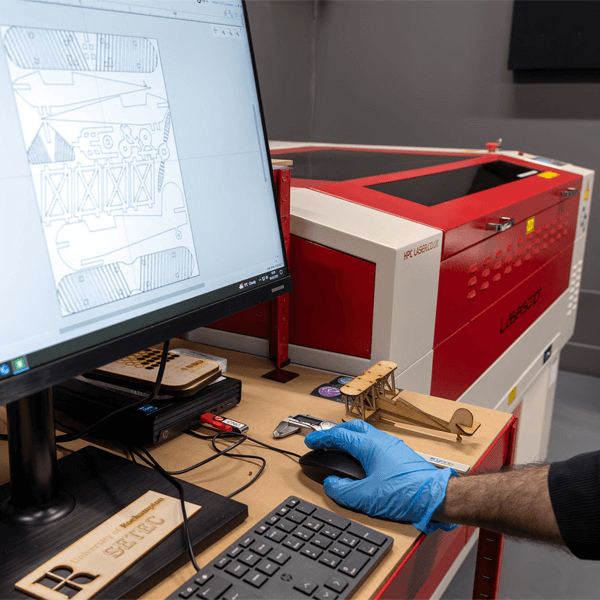
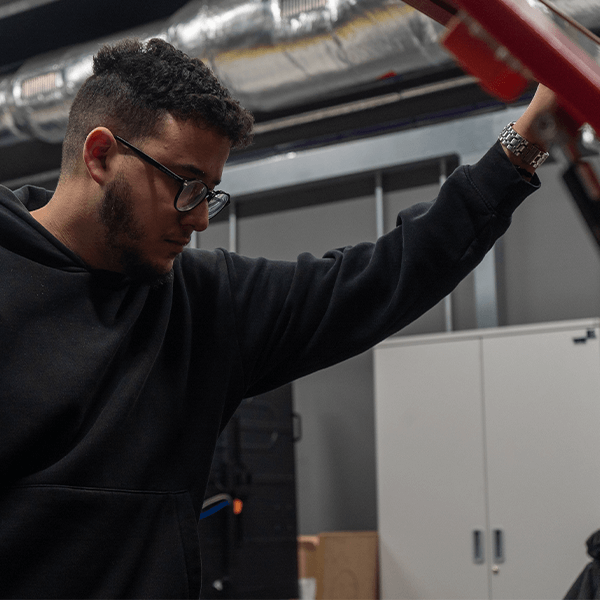
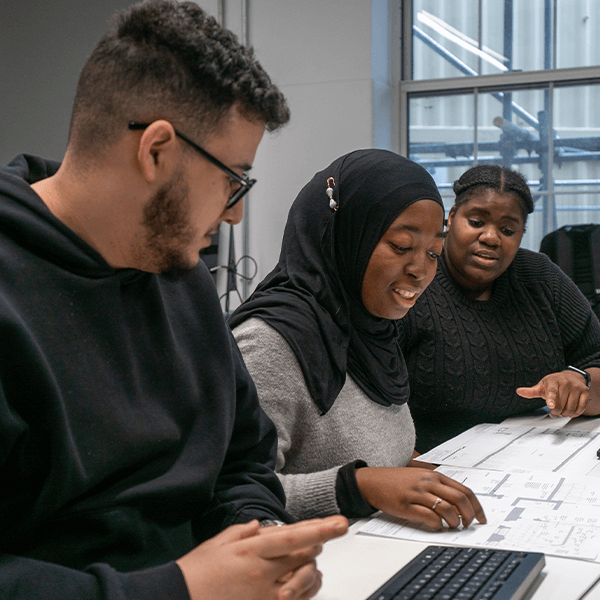
Your learning will combine short lectures with hands-on experiences to develop knowledge and understanding of the subject. The main learning takes place through lab-based practicals, applied workshops, peer-to-peer sessions, and data collection exercises using surveying equipment. Problem-based learning with industry-relevant case studies will be used throughout, helping you to apply classroom concepts to real-world situations. Regular formative feedback and support for summative assessments are built into every module.
Each module includes structured formative sessions to develop technical skills, analytical thinking, and professional behaviours. These tasks help you build the evidence, confidence, and competence needed to progress to the next stage of study and prepare you for the workplace.
How you'll be assessed
Assessments will use a combination of portfolios, lab reports, data collection exercises, and group or individual projects, including presentations. Engineering modules may include in-class tests, reflecting the type of content, but these form only a small part of the overall grade. Early assessments focus on foundational knowledge and basic application, while later tasks challenge you to demonstrate higher-level thinking, communication, and problem-solving skills.
Open days
Get a real taste of our campus, community and what it’s like to study at Roehampton
Entry requirements
Entry tariff
2026/27 entry: Call 0300 303 8320 to find out if you are eligible for this programme in Clearing
Looking to work out your UCAS points or find out about our entry requirements? Find out more.
When we consider applications to study with us, we form a complete view of your achievements to date, and future potential, and can offer flexibility in entry requirements. Find out more about our Contextual Offer scheme.
Specific entry requirements
- GCSE (or equivalent): Maths and English, Grade 4/C or above
- A level (or equivalent): Maths, Grade C or above
General entry requirements
Entry tariff
2026/27 entry: Call 0300 303 8320 to find out if you are eligible for this programme in Clearing
International Foundation Pathway:
64 UCAS (or equivalent)
IELTS: 5.5
Looking to work out your UCAS points or find out about our entry requirements? Find out more.
When we consider applications to study with us, we form a complete view of your achievements to date, and future potential, and can offer flexibility in entry requirements. Find out more about our Contextual Offer scheme.
Specific entry requirements
- GCSE (or equivalent): Maths and English, Grade 4/C or above
- A level (or equivalent): Maths, Grade C or above
General entry requirements
Apply now
Applying to Roehampton is straightforward, and we're here to guide you through every step and answer any questions you might have.
If you currently live in the UK or Ireland, you can apply directly through UCAS. Check out our UCAS application guide for all the information you need.
If you live in the UK and already have all your exam results, you can apply to us directly.
If you’re an international student, you can apply to us directly or add Roehampton as a choice on your UCAS application. Check out our guidance for international students for more information.
If you have any questions or need some support, reach out to us.
Fees and funding
UK students
Tuition fees
| Entry date | Undergraduate Year 1 | Undergraduate Foundation Year | CertHE | DipHE |
|---|---|---|---|---|
| September 2026 | £9,790 | £9,790 | £9,790 | £9,790 |
Prices shown are for the first year of your degree.
Funding your studies
We also provide other ways to support the cost of living, including on-campus car parking, hardship support and some of the most affordable student accommodation and catering in London.
International students
Tuition fees
| Entry date | Undergraduate Year 1 | Undergraduate Foundation Year | CertHE | DipHE | International Foundation Pathway |
|---|---|---|---|---|---|
| September 2026 | £20,280 | £20,280 | £20,280 | £20,280 | £20,280 |
| January 2027 | – | – | – | – | £20,280 |
Prices shown are for the first year of your degree.
Funding your studies
We also provide other ways to support the cost of living, including on-campus car parking, hardship support and some of the most affordable student accommodation and catering in London.

Need help or advice before applying?
Computing, Engineering, and the Built Environment
Join a vibrant community where we shape sustainable future through innovation, collaboration, and real-world impact.


