
You'll need:
112–128 UCAS points (or equivalent)
Foundation Year: 64–80 UCAS points (or equivalent)
International Foundation Pathway:
64 UCAS (or equivalent)
IELTS: 5.5
UCAS Codes:
X390
X394 (if choosing Foundation Year)
Start date(s):
September 2026
Are you passionate about making a difference in the lives of children, young people and communities? Do you want a degree that equips you with the knowledge, skills, and practical experience to pursue a to pursue a wide range of opportunities in education or beyond?
Our BA Education programme is designed to prepare you for a wide range of educational roles while giving you the flexibility to follow your interests and passions.
On this programme, you will gain a thorough understanding of education, exploring historical insights with contemporary debates and emerging trends. You will explore practical applications of education alongside the latest developments in digital literacy, and the constructive use of AI, while engaging with key topics such as diversity, inclusion, sustainability, creativity, and informal learning. Whether your ambitions lie in teaching, education policy, museum or creative education, or working with charities, this degree will prepare you to make a real-world impact.
You will develop your skills through hands-on experience, including placement opportunities in educational settings, interactive projects, and the chance to study abroad.

Assessments are varied and designed to provide engaging learning experiences that will help you develop a professional skill set that is relevant to today’s educational landscape.
By the end of the programme, you will be a confident, reflective, and capable practitioner, equipped with transferable skills and practical experience to succeed in a range of careers in education.
You will also benefit from a supportive and inclusive learning environment, with personalised guidance from experienced educators. Opportunities to collaborate with peers and professionals, will provide you with the tools to shape your future and make a meaningful contribution to the field of education.
Opportunities to collaborate with peers and professionals encourage you to gain wider perspective and appreciate will further empower you to shape your future and make a lasting, meaningful impact in education and beyond.
Why study BA Education at Roehampton?
Shape your future, your way
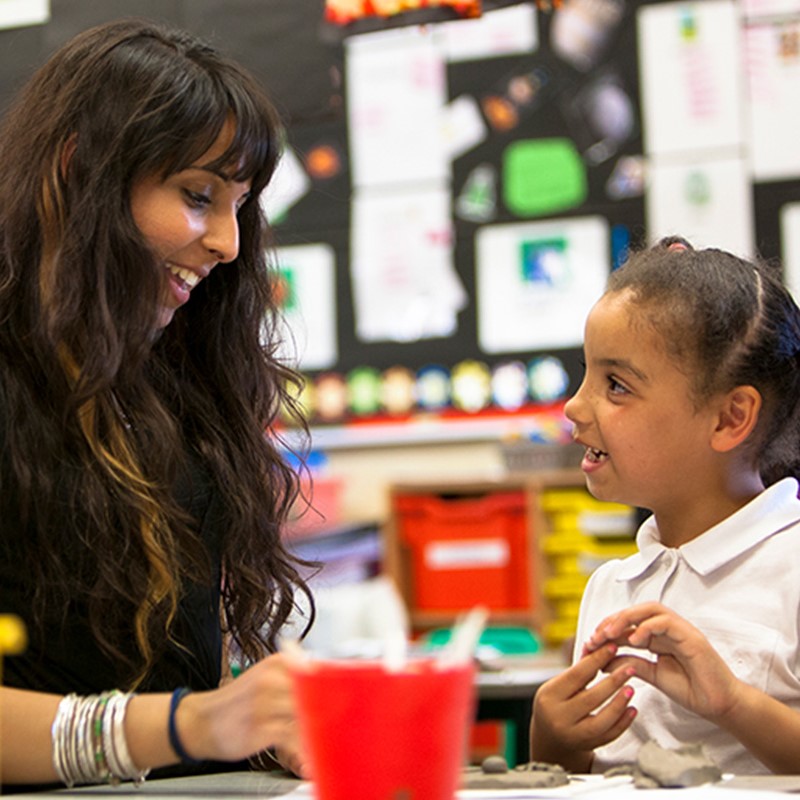
This degree gives you a variety of career pathways. It opens doors to teaching, policy, research, creative education, and third sector roles - giving you the freedom to explore your interests and ambitions.

Learn through real-world experience
From placements and projects to guest speakers and study visits, you’ll connect theory with practice and gain hands-on experience in the education sector.

A degree with inclusion at its heart
Every module embeds principles of equity, diversity, and inclusion, giving you the skills to work confidently in diverse, modern educational environments.
Modules
In this module you will explore contemporary issues in education and early years, developing a broad and informed understanding of topics such as children’s wellbeing, identity, belonging, spirituality, professionalism, curriculum, and assessment. You will consider diverse perspectives, reflect on ethical and global dimensions, and challenge assumptions linked to childhood and sustainability. You will also build essential academic skills, including confident communication, analytical thinking, responsible use of AI, and accurate referencing. By reflecting on your learning and engaging with university support, you will strengthen your academic development and prepare for future career opportunities. You will consolidate your learning through interactive tasks, a presentation, and a position paper.
In this module you will explore the key ideas and disciplines that underpin education, including history, sociology, and philosophy, to develop as a reflective and inclusive practitioner. You will examine how education has evolved in the UK and globally, its changing aims, and its role in promoting justice and inclusion. You will consider how past policies, social structures, and philosophical perspectives shape learning, and reflect on your own values and goals. Central themes include effective engagement, representation, intersectionality, play, relationships, community, and Froebel’s influence, helping you think critically about decisions in diverse educational contexts.
In this module you will explore the foundations of inclusive education, examining models of disability, neurodiversity, and the social and cultural factors that shape learning experiences. You will investigate how intersecting identities such as race, class, gender and disability influence inclusion, and critically analyse barriers to equitable education. Through lectures, seminars and practical activities, you will develop awareness of inclusive pedagogical approaches, reflective practice, and professional values. By linking theory, policy and personal experience, you will build the knowledge and skills to advocate for and support inclusive, equitable and socially just practices across diverse educational settings.
In this module you will explore human development across the lifespan, with a focus on inclusive educational practice. You will examine growth across physical, cognitive, emotional, and social domains, and consider how practice can adapt to support developmental and individual differences. You will engage with key theories, research methods, and ethical and cultural considerations, applying these to inclusive pedagogy and intersectionality. By exploring how learners’ identities and experiences shape development, you will develop critical thinking, collaborative skills, digital communication, and resource creation, preparing you to support diverse learners and enhance your employability in education and related fields.
These are the current planned modules on this course and may be subject to change.
Module details:In this module, you will undertake a placement in an educational setting, allowing you to apply subject knowledge and practical skills while developing key competencies in line with QAA benchmarks. Through supported preparation, hands-on experience, and reflective practice, you will consolidate academic learning in real-world contexts. You will explore themes such as equity, diversity, and inclusion, and engage with pressing educational challenges. With flexibility in choosing your placement, personalised support, and access to enrichment opportunities, this 30-credit module spans two semesters and is designed to build your confidence, broaden your experience, and enhance your future career prospects.
How you'll learn: Lectures will explore key areas of educational enquiry and practice, including theory, research, and essential training such as DBS, Safeguarding, and the Chancellor’s Award. Seminars will focus on critical thinking and reflective workshops, supported by 30 minutes of weekly asynchronous digital learning, including ePortfolio tasks, discussion forums, guest speaker content, and a range of multimedia resources.
Assessment: This module is assessed through an online ePortfolio, used both as a learning and assessment tool to develop reflective practice. Students will critically engage with theory and apply it to real-world observations from their placement, while also reflecting on personal and professional development. The ePortfolio supports the integration of academic and practical learning, encourages ownership of progress, and helps build skills for future career pathways. Structured tabs will guide students through reflective tasks, enabling them to evaluate their strengths and areas for growth.
In this module you will explore how creativity shapes and challenges contemporary educational practice, examining what it means in classrooms and other learning settings. You will engage with concepts such as ‘big C and little c’ creativity, ‘flow’ and divergent thinking, and consider how creativity can be encouraged, assessed, and applied across the curriculum. You will reflect on inclusion, neurodiversity, sustainability, global issues, and diverse learning preferences, while analysing how education systems and policies support or constrain creative teaching. Through theory and practical activities, you will develop your own creative approaches and apply them to your professional practice.
In this module you will deepen your understanding of the nature, purpose and use of educational research in local, national and global contexts. You will engage critically with different methodologies and paradigms, exploring how evidence is gathered, interpreted and applied across varied social, economic and cultural settings. You will examine how research informs professional practice, shapes policy and supports educational innovation. Through ethical and methodological reflection, you will strengthen your skills in enquiry and learn to connect theory with practice, helping you contribute to inclusive and evidence based educational environments.
In this module you will explore how inclusive education can flourish beyond formal school settings, examining learning experiences in museums, galleries, science centres, cultural and spiritual sites, the outdoors, and online spaces. You will consider how these environments provide accessible, engaging and socially responsive learning for all ages. Building on prior studies, you will develop as an inclusive practitioner, exploring strategies across arts, heritage, community, youth work, early years, intergenerational projects, and digital outreach. You will reflect on diverse approaches to learning beyond the classroom, including outdoor education, residential centres, libraries, archives, and creative use of technology.
These are the current planned modules on this course and may be subject to change.
This course offers all students the option of a one-year paid work placement, to boost your employability even further. If you choose this route, you will take the placement following year two of your course, and then return to complete your degree.
Why take a placement?
A placement year is the perfect opportunity to gain valuable work experience, to build on the career skills we will teach you on this degree. The connections you make on the placement will improve your career prospects further, and equip you with the skills you need to secure graduate-level employment.
How we support you
The University's Placement and Work Experience Team are experts at helping you to secure a placement. They will work closely with you from the start, helping you research potential employers, discover placement opportunities, create and pitch your CV, and will coach you to perform well in interviews. We aren't able to guarantee a placement, but our sector-leading advisors will give you the best possible chance of securing one.
Find out more about how we'll support you
We understand that your plans might change once you start your programme. If you decide not to do a placement, you will have the option of completing the three year version of your programme.
Whatever your choice, you will have access to many opportunities for work experience through our Placement and Work Experience Team, and access to face-to-face and 24/7 online careers support.
In this module you will undertake your Capstone Project, bringing together the knowledge, skills and experiences gained throughout your degree. You will design and complete an independent project in education or early childhood studies that reflects your interests, whether through action research, investigation, dissertation or another in-depth study with real-world relevance. Supported by a supervisor, you will apply theory to practice, integrate prior learning and placement experiences, and develop professional expertise. This module will challenge you to produce work that demonstrates academic rigour, practical impact, and prepares you for future career opportunities or further research.
In this module you will explore the multidimensional nature of wellbeing and its role in supporting holistic development and learning. You will examine physical, emotional, social, and mental health, engaging with theories, historical perspectives, and contemporary policy frameworks. You will apply concepts from positive psychology, growth mindset, and social pedagogy, using practical strategies such as social and emotional learning, circle time, and targeted interventions. Through case studies, collaboration, and reflection, you will develop the skills to create inclusive, supportive environments, enhance resilience and emotional literacy, and gain practical qualifications such as Mental Health First Aid to strengthen your professional practice.
In this module you will critically reflect on and synthesise your learning journey, evaluating how your knowledge and experiences can inform future career pathways. You will deepen your understanding of learning, teaching, and assessment across diverse educational contexts, building on prior modules in Professional Practice. You will explore professionalism in education, examine contemporary issues such as AI, sustainability, and global educational trends, and engage with research and expert insights. Through reflective activities, you will analyse the current educational landscape, anticipate challenges and opportunities, and develop the skills and understanding needed to enhance employability and workforce readiness.
In this module you will explore the social and personal challenges young people face as they transition into adulthood, considering global and multicultural perspectives. You will examine youth cultures, systemic inequalities, and sustainability through the lens of the UN SDGs, developing cultural competence and the skills to challenge prejudice. Through collaborative activities, case studies, and digital platforms, you will reflect on your role in society and explore ways to become an active agent of social change. You will also build transferable skills in critical thinking, teamwork, digital literacy, and media production, preparing you for careers in education, media, and public advocacy.
In this module you will explore how media shapes ideas about childhood, education, and the representation of children. You will examine portrayals across TV, film, art, advertising, and digital platforms, considering cultural and social differences and reflecting on your own perspectives. You will develop media literacy through methods such as visual analysis, semiotics, qualitative and quantitative approaches, and transmedia storytelling. You will also create media outputs and engage with gallery visits to analyse historical and contemporary representations, exploring themes like gender, race, and stereotypes. This module will build your skills in critically interpreting media to inform your practice as an education professional.
These are the current planned modules on this course and may be subject to change.
This course offers a foundation year, which takes place at the beginning of your studies. Studying a foundation year will give you academic and practical experience, and a strong introduction to your subject, ensuring you succeed on your undergraduate degree.
30 credits
You will develop your core academic and integrated English language skills of speaking, listening, reading and writing. You will become familiar with key academic skills and concepts, such as referencing methods and awareness of academic integrity and tone. You will apply these skills and knowledge to both broad topics and also your chosen subject pathway.
Teaching and learning
You will be required to actively engage in on-campus learning for up to 10 hours a week.
You will be taught through a full range of teaching and learning methods, which include lectures, seminars, workshops, discussion groups, group directed tasks and presentations. This will enable you to learn from your peers and tutors in both structured and information settings.
You will be encouraged to think creatively about your approach to learning and discussions with your peers. You will also have access to recordings, resources, links and signposting through Moodle to enrich your learning.
Assessment
You will be assessed through group and individual presentations, comparative and reflective essays, multiple choice exams, coursework and reports, oral exams, portfolios, case studies and blogs.
30 credits
You will develop your core academic and integrated English language skills of speaking, listening, reading and writing. You will become familiar with key academic skills and concepts, such as referencing methods and awareness of academic integrity and tone. You will apply these skills and knowledge to both broad topics and also your chosen subject pathway.
Teaching and Learning
You will be required to actively engage in on-campus learning for up to 10 hours a week.
You will be taught through a full range of teaching and learning methods, which include lectures, seminars, workshops, discussion groups, group directed tasks and presentations. This will enable you to learn from your peers and tutors in both structured and information settings.
You will be encouraged to think creatively about your approach to learning and discussions with your peers. You will also have access to recordings, resources, links and signposting through Moodle to enrich your learning.
Assessment
You will be assessed through group and individual presentations, comparative and reflective essays, multiple choice exams, coursework and reports, oral exams, portfolios, case studies and blogs.
30 credits
You will develop your research, numeracy and information technology skills. You will investigate the difference between primary and secondary research, conduct your own research project and demonstrate your findings through data analysis. You will also develop your awareness of equality, diversion and inclusion in the UK, through a real-world issue; discrimination in the workplace.
Teaching and learning
You will be required to actively engage in on-campus learning for up to 10 hours a week.
You will be taught through a full range of teaching and learning methods, which include lectures, seminars, workshops, discussion groups, group directed tasks and presentations. This will enable you to learn from your peers and tutors in both structured and information settings.
You will be encouraged to think creatively about your approach to learning and discussions with your peers. You will also have access to recordings, resources, links and signposting through Moodle to enrich your learning.
Assessment
You will be assessed through group and individual presentations, comparative and reflective essays, multiple choice exams, coursework and reports, oral exams, portfolios, case studies and blogs.
30 credits
This module provides an in-depth exploration of the principles, theories and practices underpinning learning and child development. You will gain a comprehensive understanding of the key factors influencing children’s physical, cognitive, social and emotional growth, as well as your implications for effective educational practice. Drawing on foundational theories by Piaget, Vygotsky, Froebel, Skinner and others, this module bridges the gap between theoretical perspectives and practical application in diverse educational contexts.
Through weekly themes, you will examine milestones in child development, the role of play, language acquisition, individual differences, and the impact of external environments, including technology, on learning. Special emphasis is placed on reflective practice, observation, and assessment techniques, as well as strategies to support diverse learners, including those with special educational needs (SEN) and English as an Additional Language (EAL).
This module aims to also develop your critical thinking, analytical skills, and practical expertise, preparing you to create inclusive, supportive, and effective learning environments that foster holistic child development.
Teaching and learning
The teaching delivery for each module consists of one, one-three-hour lecture and one, two-hour seminar per week.
You will have a diverse learning experience of lectures/seminars, case studies, practical sessions and field visits, active learning workshops and microteaches and guest speakers.
You will also have an additional 30 minutes of online support each week to enhance your understanding and learning. This will consist of formal reflection as part of the reflective journal assignment, as well as tutorial support for the informative poster.
Assessment
This module will be assessed using a reflective journal and an information poster.
50% - reflective journal, which documents your learning and insights from each session.
50% - informative poster, you will create an informative poster based on a chosen case study that investigates an aspect of child development.
30 credits
This module explores the relationship between education policies and ethical practices, emphasising your impact on teaching, learning, and professional responsibilities. Through a comprehensive study of key UK and International policies, such as safeguarding, equality, and SEND frameworks, you will critically evaluate how these policies are developed, implemented, and upheld in diverse educational settings.
This module integrates a focus on professional ethics, exploring how educators navigate complex decision-making processes while adhering to policy requirements and maintaining moral and ethical integrity.
The module prepares you to address the challenges of policy compliance and professional accountability while fostering collaboration with diverse stakeholders.
This module also aims to develop your critical thinking, analytical skills, and practical expertise, preparing you to create inclusive, supportive, and effective learning environments that foster holistic child development.
Teaching and learning
By engaging with real-world case studies, global perspectives, and interactive workshops, you will gain the skills to critically analyse policy frameworks, apply ethical reasoning, and ensure inclusive and effective educational practices.
The teaching delivery for each module consists of one, one-three-hour lecture and one, two-hour seminar per week.
You will have a diverse learning experience of lectures/seminars, case studies, practical sessions and field visits, active learning workshops and microteaches and guest speakers.
You will also have an additional 30 minutes of online support each week to enhance your understanding and learning. This will consist of activities to develop your communication skills as well as providing you with opportunities to explore wider policy implementation in diverse/comparative education settings.
Assessment
This module will be assessed using a policy review and a school-based intervention pitch.
40% - policy review, where you will critically evaluate a key education policy.
50% - school-based intervention pitch, you will be design and pitch an intervention aimed at addressing a specific issue related to educational policy and professional ethics.
These are the current planned modules on this course and may be subject to change.
Careers
As a graduate of our BA Education programme, you will be well prepared for a variety of career paths in education and related fields.
You could choose to train as a primary school teacher, continue your studies with a PGCE in Primary Education, or pursue an MA in the School of Education.
You will also have the skills and experience to explore wider opportunities, such as:
- Working as a policy researcher or advisor,
- Contributing to museum or creative education projects,
- Joining the third sector to influence education policy, curriculum development, or community programmes.
Through your academic learning, placements, and the professional networks you build, you will gain the knowledge, practical experience, and professional connections to follow a wide range of career paths and make a real impact in education.
Learning and Assessment
How you'll learn:
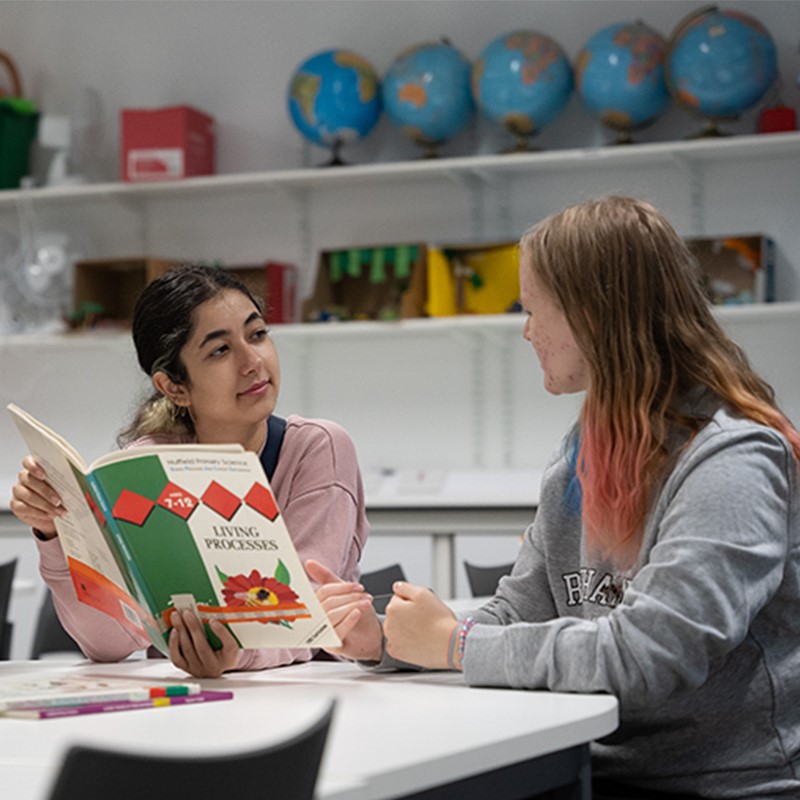
We offer a rich and engaging approach to learning that combines theory, practice, and personal development. You will explore a variety of topics and teaching approaches through interactive workshops, seminars, guest lectures, external visits, and collaborative projects.
You’ll also gain hands-on experience with a 60-hour placement in an educational setting, providing opportunities to consolidate your learning, develop professional skills, and gain deeper insights into real-world educational contexts. Study abroad opportunities and networking with peers and professionals further enhance your learning journey.
Throughout the programme, you’ll be supported by a shared study skills module, guidance from an Academic Guidance Tutor (AGT), and a dedicated Student Engagement Coach to help you transition into university life and achieve your goals.
You will take part in interactive workshops, seminars, lectures, guest lectures, external visits, and collaborative projects You will be supported and encouraged in your participation, to work collaboratively, reflect critically, and appreciate diverse perspectives so that you effectively apply knowledge, build practical skills, and develop a strong theoretical foundation. .
You will also have the opportunity to explore emerging tools and technologies, including the constructive use of artificial intelligence in education, and to develop skills to design and evaluate authentic assessments. By the end of the programme, you will have the knowledge, experience, and transferable skills to succeed in professional education roles and beyond.
How you’ll be assessed:
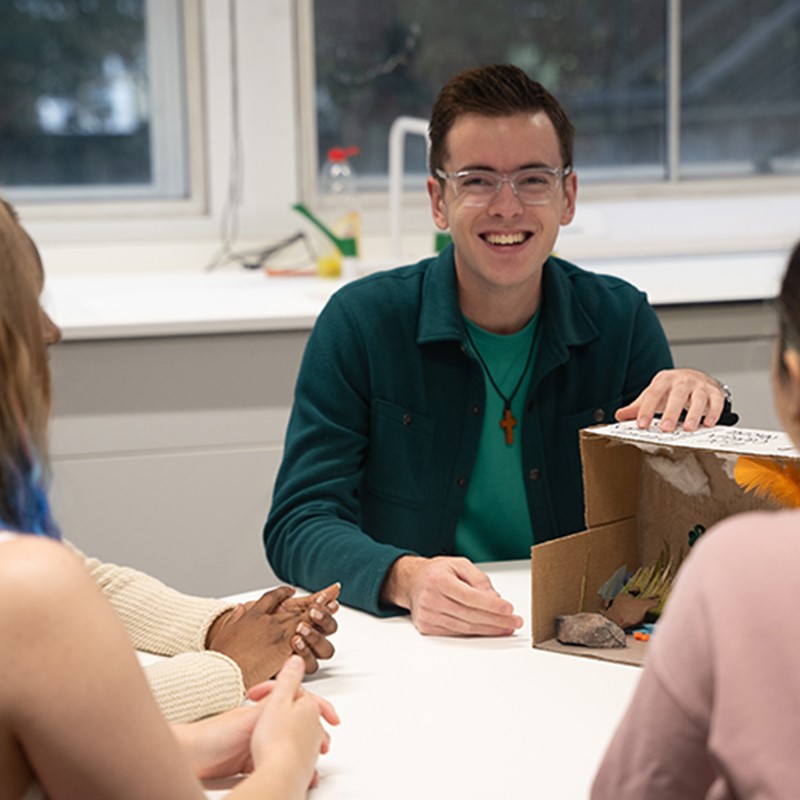
Assessment within this course takes a balanced and supportive approach, using a variety of methods to help you demonstrate your strengths and skills. You may be assessed through portfolios, presentations such as posters or story sacks, reflective writing, annotated bibliographies, analytical commentaries, and storyboards.
Our assessments are designed to help you develop practical, creative, and professional skills that are highly relevant to today’s educational landscape. Assessment methods include portfolios, presentations, reflective writing, podcasts, annotated bibliographies, storyboards, and analytical commentaries.
Tasks are authentic and inclusive, providing opportunities to create and evaluate resources for diverse learning contexts. Assessments are carefully structured to build your confidence and skillset, helping you develop a strong portfolio of work that demonstrates your ability to communicate effectively, think critically, and apply your learning in real-world scenarios suitable for employment or further study.
Open days
Get a real taste of our campus, community and what it’s like to study at Roehampton
Applying
Full-time UK undergraduate students apply through UCAS.
Entry tariff
112–128 UCAS points (or equivalent)
Foundation Year: 64–80 UCAS points (or equivalent)
Looking to work out your UCAS points or find out about our entry requirements? Find out more.
When we consider applications to study with us, we form a complete view of your achievements to date, and future potential, and can offer flexibility in entry requirements. Find out more about our Contextual Offer scheme.
General entry requirements
We recommend that all candidates have some recent experience of being in a classroom and observing teaching and learning. You may be able to arrange this with schools in your local area or that you have a contact with. If you would like help finding a school to visit then please use the Government’s Get into Teaching website -https://getintoteaching.education.gov.uk/train-to-be-a-teacher/get-school-experience
International undergraduate students apply through our direct application system.
Entry tariff
112–128 UCAS points (or equivalent)
International Foundation Pathway:
64 UCAS (or equivalent)
IELTS: 5.5
Looking to work out your UCAS points or find out about our entry requirements? Find out more.
When we consider applications to study with us, we form a complete view of your achievements to date, and future potential, and can offer flexibility in entry requirements. Find out more about our Contextual Offer scheme.
General entry requirements
We recommend that all candidates have some recent experience of being in a classroom and observing teaching and learning. You may be able to arrange this with schools in your local area or that you have a contact with. If you would like help finding a school to visit then please use the Government’s Get into Teaching website -https://getintoteaching.education.gov.uk/train-to-be-a-teacher/get-school-experience
Fees and funding
UK students
Tuition fees
| Entry date | Undergraduate Year 1 | Undergraduate Foundation Year |
|---|---|---|
| September 2026 | £9,790 | £5,914 |
Prices shown are for the first year of your degree.
Funding your studies
We also provide other ways to support the cost of living, including on-campus car parking, hardship support and some of the most affordable student accommodation and catering in London.
International students
Tuition fees
| Entry date | Undergraduate Year 1 | Undergraduate Foundation Year | International Foundation Pathway |
|---|---|---|---|
| September 2026 | £17,628 | £17,628 | £17,628 |
| January 2027 | – | – | £17,628 |
Prices shown are for the first year of your degree.
Funding your studies
We also provide other ways to support the cost of living, including on-campus car parking, hardship support and some of the most affordable student accommodation and catering in London.

Need help or advice before applying?
Education
The School of Education is renowned for its high-quality teaching and research, and is one of the principal teacher training providers in the UK.


