You'll need:
112–128 UCAS points (or equivalent)
Foundation Year: 64–80 UCAS points (or equivalent)
International Foundation Pathway:
64 UCAS (or equivalent)
IELTS: 5.5
UCAS codes:
L212
L211 (if choosing Foundation Year)
Start date(s):
September 2026
Explore the dynamic interplay of global affairs across time - past, present, and future.
This degree brings together Politics, International Relations and History to help you make sense of the world you live in. You’ll explore how power has been exercised, challenged and reimagined from the emergence of global capitalism in the nineteenth century to the political, social and environmental challenges shaping the world today.
Based on Roehampton’s green parkland campus and drawing on London’s rich intellectual, political and cultural resources, you’ll study global politics, revolutions, colonialism, democracy and justice from a genuinely interdisciplinary perspective. You’ll analyse political systems, unpack international tensions, and explore historical events that continue to shape contemporary debates around freedom, identity and equality.
Learning is dynamic, participatory, and research led. Through debates, workshops, digital projects and independent research, you’ll develop the skills, confidence and global awareness needed to make a meaningful impact in today’s interconnected world.
Top three reasons to choose Politics, International Relations, and History at Roehampton
You’ll explore global affairs across past, present, and future
You won’t study subjects in isolation. Instead, you’ll gain a distinctive interdisciplinary perspective that connects history, politics and international relations. This approach allows you to understand how historical events - from colonialism and revolution to war and partition - continue to underpin today’s global challenges, from geopolitics and democracy to justice and sustainability.

You’ll develop practical research skills using advanced tools
You’ll gain hands-on experience with a wide range of research methods, including qualitative and quantitative approaches. You’ll work with archives, digital humanities tools and data analysis software such as SPSS, building confidence in your ability to analyse complex information. You’ll also learn how to use digital resources and AI ethically and effectively – skills that are increasingly valued by employers.
Dedicated support from expert staff
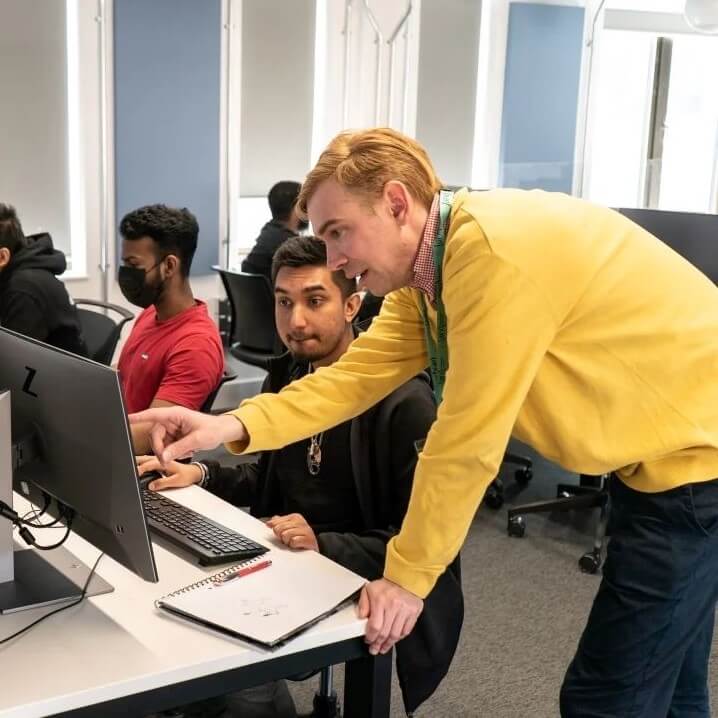
You’ll be supported throughout your degree by an experienced and passionate team of academics who are active researchers in politics, international relations and history. Learning is highly interactive, with workshops, debates and simulations designed to help you build confidence and find your voice. You’ll also benefit from academic guidance tutors, strong peer communities and opportunities to engage with external practitioners working in charities, government and NGOs.
Top modern university in London in History
(Complete University Guide 2025)

Ranked 12th best History programme in the UK
Guardian League Table 2024

History ranked 1st in London for Academic Support
National Student Survey 2024

Modules
This module introduces you to the core skills and essential approaches involved in the practice of history. It traces the evolution of modern historiography, from the ‘Rankean revolution’ of the nineteenth century, through to the interwar impact of the Annales School, Marxist narratives, and the emergence of social, gender and postcolonial history in the mid twentieth century. Crucially, the module demonstrates that history is never ‘done’; we explore cutting-edge developments in terms of emotions, Black, Queer, disability and environmental histories; engage with prevailing ‘think pieces’ about best historical practice; and reflect on how contemporary events such as the Black Lives Matter campaign have galvanised efforts to pen a more inclusive account of the past. In the process, you are introduced to influential historians and a range of methodological approaches that will inform the rest of the History programme. By working closely with secondary sources, you will practice identifying an argument, trace scholarly debates and develop your own academic writing and presentation skills. Moreover, the module also highlights the ‘real world’ impact of major historiographical interventions e.g. how Queer History has helped heritage sites reconfigure the stories they present to the public. This culminates in an end-of-term field trip where you can explore shifting interpretations within a museum setting.
The word ‘Lab’ in the title reflects this module’s role as a space for you to learn and experiment with new ideas and study techniques as you ease into their degree. Accordingly, workshops will inculcate vital study skills (effective notetaking, referencing, reading comprehension, time management etc), and embed a ‘long induction’ to Roehampton, including various ‘check-in points’ where you will reflect on how the transition to University study is going. This module provides the essential building blocks for the rest of the degree programme.
This module provides the tools to understand the complex forces shaping our world's biggest challenges – from wars and vast economic inequalities to human rights crises. You'll delve into politics using both a historical and theoretical lens, gaining the ability to identify and explain the processes behind global issues. We'll examine how major global challenges have evolved, through alternative theoretical frameworks such as Realism, Liberalism, Marxism, Constructivism, and Feminism. You'll also analyse how various actors – from individuals and governments to international organizations – approach these problems, dissecting their diverse roles on the world stage.
This module establishes the foundational theories and frameworks that will underpin your success in later, more advanced modules in international relations. You'll be introduced to key subfields including international security, political economy, foreign policy, and IR theory. Through engaging case studies, you'll gain practical insight into real-world global challenges like conflict, economic injustice, and migration. You'll learn to identify and describe the factors driving both cooperation and conflict in world politics, appreciating the inherent diversity of international relations and applying powerful theories to comprehend contemporary global issues.
Module overview:
This module explores how core ideas like power, authority, citizenship, democracy, liberty, and equality have been theorised and debated, examining them through the lens of significant moments in British history. We consider how the meanings behind political concepts have shifted and contested over time.
This module is your gateway to understanding the fundamental elements of political studies. We'll explore the structure and functions of the state, the core principles of constitutionalism, and the practical workings of democratic institutions. You'll discover how political attitudes develop through culture and socialisation, and how these influences shape participation and voting behaviour. We'll then analyse the dynamics of power and influence in political life, gaining a critical overview of major political ideologies. We'll also investigate the crucial role of media and social movements in shaping political communication and driving change, concluding with an introduction to public policy formulation and implementation. By the end of this module, you'll have a solid grounding in the key aspects of the political world, helping you make sense of current events and consider your own role in shaping society.
These are the current planned modules on this course and may be subject to change.
This module introduces students to the methodology and practice of comparative politics. It does so by engaging in a systematic examination of some of the main issues, both thematic and methodological, involved in the study of comparative political systems today, and then by applying the insights gained to leading political systems. The module builds on knowledge gained in What is Politics? to further explore the structures of governments, the variations in state organisation, governmental forms and party systems. It will examine the main elements of the modern democratic state in a comparative manner, stressing both the commonalities and differences between systems around the world.
In this module students will examine how modern Latin America was forged through European invasion and colonization, indigenous resistance and African slavery, and the famous Wars of Liberation. Progressing through the 19th and 20th centuries they will examine how power has been challenged and changed hands up to the present day through popular uprisings, military coups, and political transformations.
The module begins with the experiences and voices of the indigenous people, followed by a longue durée analysis of the impact of the horrors of slavery. This leads into a wider examination of the context of Iberian, British and American colonialism, and how indigenous experiences of contact with European peoples changed across time and space. Through this module students will gain expertise in how European colonialism and institutions such as the Roman Catholic Church and European monarchies have shaped South America and the wider Global South. The module also considers how indigenous, indentured, and slave communities continued sustain violent and non-violent strategies of resistance, firstly, against different forms of authoritarianism, and, secondly, against extractive processes, linked to global capitalism (and liberalism), which have fundamentally altered ecologies and landscapes. The module also engages with the impact and reframing of global political movements within the continent. These range from the incubation and adaption of various strands of fascism, to Latin America’s critical role in sustaining various international communist movements.
The module has contemporary relevance. Students will familiarize themselves with thinkers, writers, and political figures whose ideas shaped the globe, from Castro and Che Guevera to Garcia Marquez and Borges, and will thus engage with ideas which shape the world of today. Students consider the long-lasting impact of a violent history of revolutions, coups, and warfare across the continent, and the influence of USA upon Latin American politics, extending to the rise of Jair Bolsonaro and Javier Milei in Brazil and Argentina respectively. Through this module students will gain an understanding of the complex history of Latin America, and the role the continent continues to play in world affairs today.
At level 4 students will in ‘Political Concepts. Ideas in Context’ power, democracy and freedom and hence will be able to apply these models to a Latin American context. The module also had cross-overs with its companion level 5 module, the Politics of Partition. Britain, Ireland and the Middle East’, and to the level 6 module on ‘Boling Points. Crisis and Conflict in the Cold War’.
The purpose of this module is to teach you about carrying out social research. It is designed to introduce you to the processes involved in research design and their application to the social sciences, in particular sociology, criminology, digital forensics, policing, politics, and international relations. It is a practical module, during which you will conduct empirical research, consider ethical issues, and write a research proposal. We will examine the theoretical, ethical, and practical dimensions of the research process and will look at a range of quantitative and qualitative methodologies for collecting and analysing social scientific data.
By the end of the module, you will be competent in carrying out criminological, policing, and/or sociological research. You will also develop a range of transferable skills including quantitative and qualitative data analysis and using software such as SPSS.
This module examines the origins of contentious the political and ethnic divides in Ireland and the Middle East which continue to shape world affairs. Comparing these regions through the lens of Britain’s changing role, you will also develop an understanding of how conflict overseas impacted British politics and culture domestically.
Beginning with the Irish War of Independence, the Anglo-Irish Treaty, and the ensuing Irish Civil War, you will examine how partition of the island of Ireland into Northern Ireland and the Irish Free State reflected both historic divisions between Nationalist and Unionist communities and contemporary political manoeuvring in the corridors of power. You will have the opportunity to contrast the experiences of people in post-conflict Ireland in 1923 with the inhabitants of the newly established British Mandatory Palestine, and the issues faced by its communities over the subsequent decades. Exploring the impact of population transfers, religious and political extremism, the Second World War and the Arab-Israeli War and First Nakba, you will gain new insights into a relatively familiar period of the 20th century. Examining writings and other cultural production from sources as varied as IRA guerillas, Jewish migrants who undertook the Third Aliyah, the female organisers of Arab Women’s Congress, and British soldiers who served in both Ireland and Mandatory Palestine, you will engage with a range of perspectives. Reading music, poetry, and philosophy produced by those experiencing political changes will afford you a glimpse into how societies in transition coped with turbulent historical circumstances and the varied roles played by the British government and people in shaping them. As they consider historical attempts at resolving these conflicts, such as the Sunningdale Agreement and the Camp David Accords, you will reflect on the complexities of meditating between different communities, as well as on the continued relevance of such processes in pursuit of peace into the present day.
This level 5 autumn module will enable you to deploy their understanding of themes such as citizenship, democracy and nationhood explored in the previous year’s level 4 smodule ‘Political Concepts’ in a relevant historical context. Engagement with the history of civil rights, especially in the USA in the late 20th century developed in level 4, is also built upon by examining the specific contexts of the Northern Ireland Civil Rights movement and the struggle for a two-state solution in Israel-Palestine. You will extend their understandings of debates over fundamental rights to new geographical and historical contexts. Specific and detailed engagement with the Troubles, and Irish history more broadly in the 20th century, will expand on familiarity acquired during Week 9 of Level 4 module Britain from Blitz to Brexit addressing the Troubles up to the Good Friday Agreement, affording you earlier historical context and a more nuanced understanding of the global scope of the conflict. The module makes connections with international solidarity efforts between various self-identified ‘liberation struggles’ in the complimentary level 5 on ‘Revolutions and Authoritarianism in Modern Latin America’, and particularly the example provided by the Cuban Revolution to Irish and Palestinian revolutionaries. This will acquaint you with a key aspect of the level 5 module ‘Revolutions and Authoritarianism in Latin America’. The module also lays the groundwork for level 6 modules ‘Boiling Points. Crisis and Conflict in the Cold War” and ‘After Auschwitz: Representing the Holocaust’: in the former case by exploring a key Cold War ‘boiling points’ such as the Suez Crisis and the Arab-Israeli Wars, in the latter case by directly addressing the role of the Holocaust in the birth of the Israeli state and the subsequent historiography and legacy of the Shoah in Israel.
These are the current planned modules on this course and may be subject to change.
This course offers all students the option of a one-year paid work placement, to boost your employability even further. If you choose this route, you will take the placement following year two of your course, and then return to complete your degree.
Why take a placement?
A placement year is the perfect opportunity to gain valuable work experience, to build on the career skills we will teach you on this degree. The connections you make on the placement will improve your career prospects further, and equip you with the skills you need to secure graduate-level employment.
How we support you
The University's Placement and Work Experience Team are experts at helping you to secure a placement. They will work closely with you from the start, helping you research potential employers, discover placement opportunities, create and pitch your CV, and will coach you to perform well in interviews. We aren't able to guarantee a placement, but our sector-leading advisors will give you the best possible chance of securing one.
Find out more about how we'll support you
We understand that your plans might change once you start your programme. If you decide not to do a placement, you will have the option of completing the three year version of your programme.
Whatever your choice, you will have access to many opportunities for work experience through our Placement and Work Experience Team, and access to face-to-face and 24/7 online careers support.
In this module you will design and lead an independent research project on a subject of your own choice, drawing on your knowledge related to your subject of study and of research methodology and ethics. You will have a choice of conducting either an empirical research study where you will be collecting primary quantitative or qualitative data, engage in a theoretical library-based investigation, or produce a research-based report for stakeholders, such as for an employer or community organisations.
The module will also include in-class taught sessions during the first five weeks of the term, to provide you with general advice and support. In the first weeks of the term, you will be assigned to an academic member of staff who will provide you with advice and support during the whole project.
The study of politics fundamentally explores power and hegemony. Historically, these dynamics have been concentrated in the Global North, though emerging powers are increasingly asserting their influence in global politics. The current world order is in a state of flux, hovering between a potential return to traditional Great Power politics and the emergence of a multipolar order. Countries like the U.S. and the European bloc are prioritizing their sovereign needs while responding to pressures from actors such as Russia and Israel.
Geopolitics specifically examines how states, regions, and organizations leverage their geography to acquire and wield global power. This module will explore the relationship between geography, politics, and power, examining how power is asserted and contested across different spaces, with a focus on both the Global North and Global South. We will analyse key concepts in geopolitics, critical geopolitics, and the interplay of foreign and economic policy from global and regional perspectives. Topics covered include theories of power, interstate competition and cooperation, territorial disputes, and the rise of new global actors.
On this module, you will engage in debates on contemporary geopolitical issues, ranging from the development of new technologies and the growing influence of multinational corporations to political instability and climate change, to understand how power manifests in real-world scenarios. Through various case studies, we will trace the evolution of geopolitical ideas and ideologies that continually reshape political spaces. Ultimately, you will learn to deconstruct geopolitical narratives and formulate your own arguments on the nature of the current World Order and its potential future.
This Global Connections module questions how we remember and represent the Holocaust. We explore the history of the Nazi genocide and its depiction within contemporary culture (including films, video games and art), and consider how the Holocaust continues to provoke emotive debates regarding memorialisation, educational policies and modern-day ‘dark tourism’.
Democracy and justice are foundational concepts, but their meaning, value, and interplay are profoundly complex. While many nations in the Global North champion liberal democratic principles with their emphasis on representation and rights, this module challenges you to consider how democracy is experienced across states and if it genuinely serves as a prerequisite for peace. Building on your understanding from Applied Political Theory and Comparative Politics, we will rigorously analyse the relationship between democratic principles and the quest for justice. You'll compare liberal democracies with non-democratic regimes, exploring the diverse struggles towards a more just society. We will examine the relationship between democracy and legitimate authority and consider whether human rights can only be fully respected in states that facilitate political equality through democratic representation.
Crucially, this module confronts how different communities experience justice. We will explore the vital concept of intersectionality, examining how factors like race, gender, sexuality, religion, and class shape access to justice, or the lack thereof, within and beyond liberal democracies. We'll also investigate the role of the state, civil society, and various institutions in upholding or undermining justice, with specific attention to how corruption, accountability, and participation can impact democratic outcomes. You'll engage with pressing contemporary challenges such as populism and democratic backsliding, and consider the evolving landscape of digital democracy and technology. This class encourages lively debate, critical questioning, and thoughtful contemplation of complex political controversies and dilemmas. By the module's end, you'll have a nuanced understanding of conflicts, rights, and justice, along with a clear perspective on the contemporary challenges, gaps, and future of democracy and justice.
These are the current planned modules on this course and may be subject to change.
This course offers a foundation year, which takes place at the beginning of your studies. Studying a foundation year will give you academic and practical experience, and a strong introduction to your subject, ensuring you succeed on your undergraduate degree.
30 credits
You will develop your core academic and integrated English language skills of speaking, listening, reading and writing. You will become familiar with key academic skills and concepts, such as referencing methods and awareness of academic integrity and tone. You will apply these skills and knowledge to both broad topics and also your chosen subject pathway.
Teaching and learning
You will be required to actively engage in on-campus learning for up to 10 hours a week.
You will be taught through a full range of teaching and learning methods, which include lectures, seminars, workshops, discussion groups, group directed tasks and presentations. This will enable you to learn from your peers and tutors in both structured and information settings.
You will be encouraged to think creatively about your approach to learning and discussions with your peers. You will also have access to recordings, resources, links and signposting through Moodle to enrich your learning.
Assessment
You will be assessed through group and individual presentations, comparative and reflective essays, multiple choice exams, coursework and reports, oral exams, portfolios, case studies and blogs.
30 credits
You will develop your core academic and integrated English language skills of speaking, listening, reading and writing. You will become familiar with key academic skills and concepts, such as referencing methods and awareness of academic integrity and tone. You will apply these skills and knowledge to both broad topics and also your chosen subject pathway.
Teaching and Learning
You will be required to actively engage in on-campus learning for up to 10 hours a week.
You will be taught through a full range of teaching and learning methods, which include lectures, seminars, workshops, discussion groups, group directed tasks and presentations. This will enable you to learn from your peers and tutors in both structured and information settings.
You will be encouraged to think creatively about your approach to learning and discussions with your peers. You will also have access to recordings, resources, links and signposting through Moodle to enrich your learning.
Assessment
You will be assessed through group and individual presentations, comparative and reflective essays, multiple choice exams, coursework and reports, oral exams, portfolios, case studies and blogs.
30 credits
You will develop your research, numeracy and information technology skills. You will investigate the difference between primary and secondary research, conduct your own research project and demonstrate your findings through data analysis. You will also develop your awareness of equality, diversion and inclusion in the UK, through a real-world issue; discrimination in the workplace.
Teaching and learning
You will be required to actively engage in on-campus learning for up to 10 hours a week.
You will be taught through a full range of teaching and learning methods, which include lectures, seminars, workshops, discussion groups, group directed tasks and presentations. This will enable you to learn from your peers and tutors in both structured and information settings.
You will be encouraged to think creatively about your approach to learning and discussions with your peers. You will also have access to recordings, resources, links and signposting through Moodle to enrich your learning.
Assessment
You will be assessed through group and individual presentations, comparative and reflective essays, multiple choice exams, coursework and reports, oral exams, portfolios, case studies and blogs.
30 credits
This module supports a broad exploration of crime and law and its integration within society across various sources, which includes diverse cultural, social, and political representations. By analysing a wide range of topics, you are encouraged to critically engage with how disability, gender and race are represented and viewed in relation to crime and law.
This course integrates sustainability by looking at the sustainability of social interactions and your results and consequences in relation to crime and law. Social responsibility, legal injustice across the globe and inequality are all featured. Social Responsibility is embedded through topics such as social identity, prejudice and exclusion. Social Cognitive Theory and Rational Choice Theory helps you understand challenges and question accountability for individuals and communities.
This course fosters global engagement by examining the inequalities experienced in other cultures, particularly in relation to race, gender and exclusion. Global challenges are addressed at every step equipping you with the skills to navigate a globalised world in a variety of ways. By analysing data and text concerning diverse cultures and contexts, you will develop an understanding of how individuals and cultures operate amongst injustices in a globalised world, preparing you to engage thoughtfully with diverse audiences.
Teaching and learning
Through lectures, workshops, group work, and structured academic writing, you will have the opportunity to practice the core academic skills needed for your future studies. Critical thinking will be developed through tasks such as text analysis, group discussions, and the ability to create well-structured academic assignments, including essays and presentations.
The teaching delivery for each module consists of one, one-three-hour lecture and one, two-hour workshop per week. You will get a diverse learning experience through case studies and active learning workshops and microteaches.
You will also have an additional 30 minutes of online support each week, consisting of activities to develop your presentation skills and to provide you with opportunities to explore wider policy implementation in diverse/comparative transnational examples.
Assessment
This module will be assessed using a video presentation and summative essay.
30% - video presentation, working in groups, you will produce a video on a topic taught on the curriculum and explain its impact on UK society, using a real-world example.
70% - summative essay, you will identify an issue, either historical or contemporary, that has had an impact on UK society and connect it to at least one of the key topics covered in the course.
30 credits
This module supports a broad exploration of social understanding across various sources, which includes diverse cultural, social, and political representations. By analysing a wide range of topics, you are encouraged to critically engage with how disability, gender and race are represented and viewed. This ensures that your projects and research can reflect a variation of perspectives, fostering a more inclusive and holistic learning environment.
This course integrates sustainability by looking at the sustainability of social interactions and your results and consequences. Social responsibility, globalisation and inequality are all featured. Social Responsibility is embedded through topics such as social identity, prejudice and exclusion. Social Cognitive Theory and Rational Choice Theory help you understand challenges and question accountability for individuals and communities.
This course fosters global engagement by examining the inequalities experienced in other cultures, particularly in relation to race, gender and class. Global challenges are addressed at every step, equipping you to navigate a globalised world in a variety of ways. By analysing data and text concerning diverse cultures and contexts, you develop an understanding of how individuals and cultures operate in a globalised world, preparing you to engage thoughtfully with diverse audiences.
Teaching and learning
The teaching delivery for each module consists of one, one-three-hour lecture and one, two-hour seminar per week. Lecturers will cover core indicative content, while seminars will consist of research workshops, as well as forming small groups and learning on relevant case studies.
You will also have an additional 30 minutes of online support each week, consisting of activities to develop your presentation skills and to provide you with opportunities to explore wider policy implementation in diverse/comparative transnational examples.
Assessment
This module will be assessed using an academic poster and a summative essay.
40% - academic poster, you will design a poster that provides key information and sociological analysis of your selected story or issue chosen from key weekly topics.
60% - summative essay, you will conduct a sociological analysis of a story or issue you have encountered in the media.
These are the current planned modules on this course and may be subject to change.
Careers
This degree challenges you to think globally and comparatively, engaging with political, social, cultural and intellectual histories from across the world.
You’ll learn how historians, political scientists and international relations scholars work in practice, with opportunities to engage in public debate, digital humanities projects, archival research and consultancy-style assessments linked to real-world challenges.
If you’re ready to learn, we’ll help you build the confidence, skills and experience to succeed in a wide range of careers, including:
- Civil service
- Publishing
- Broadcasting and media
- Legal professions
- Charity and third sector organisations
- Teaching
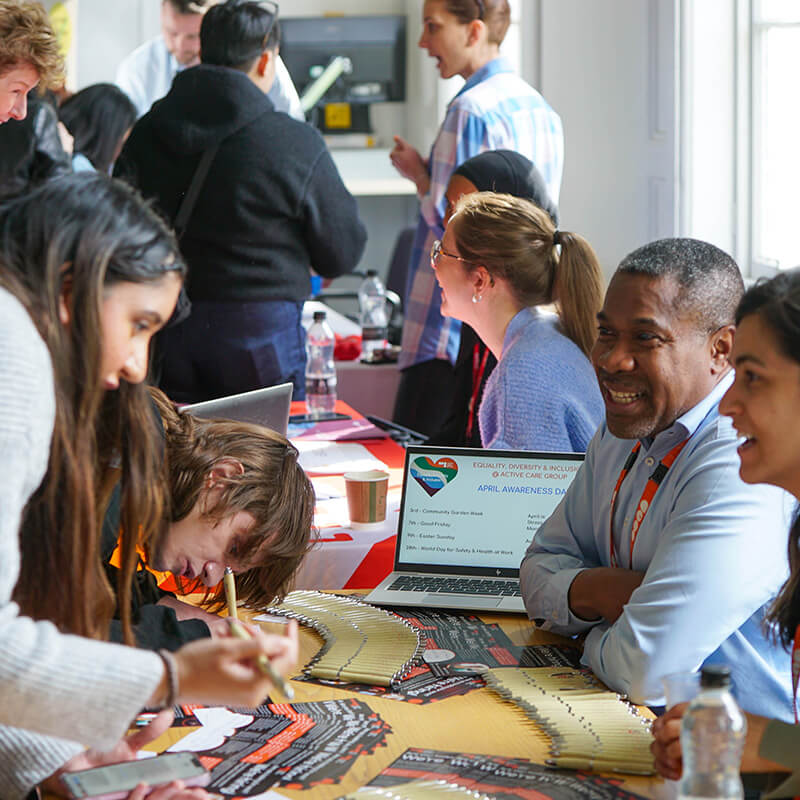
The Student Futures team is here to support you throughout your time at Roehampton and beyond.
They offer services tailored to your needs, helping you take confident steps towards your future.
You’ll have access to a wide range of career workshops and events, where you can engage with employers and develop the skills you need to succeed in the workplace.
These opportunities will help you build your CV, prepare for interviews, and connect with successful Roehampton graduates who are thriving in their careers. You’ll also be able to engage with our partners across London and beyond.
Wherever you want to go in the future, you'll be preparing for the world of work from your very first day.
Learning and assessment
Dive into a dynamic, research-led curriculum designed to keep you engaged, challenged and supported.
Throughout your degree, you’ll learn through a mix of expert-led teaching, interactive workshops, collaborative activities and independent research. You’ll explore the long-term roots of contemporary political and social issues and examine how they are represented in culture, education and public debate.
Assessment is varied and progressive, helping you build academic confidence while developing professional skills valued by employers.
How you'll learn:
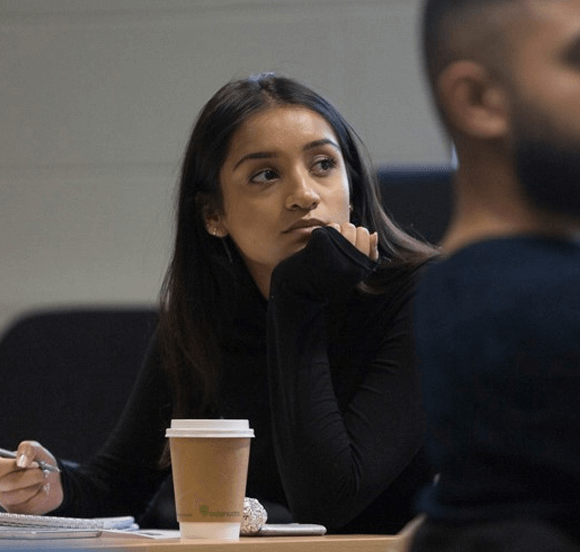
You’ll learn from leading experts who are passionate about their subjects and committed to inclusive, student-centred teaching. Sessions are designed as interactive workshops rather than traditional lectures, combining short lectures with discussion, debates, simulations and practical research activities.
You’ll explore globally focused topics across politics, international relations and history, while developing a modern, professional skillset that includes:
- Analysing global affairs across the past, present and future
- Understanding political systems, international relations and their historical foundations
- Examining connections between power, identity and justice
- Developing traditional research skills, including archival research
- Building strong digital literacy through data analysis and digital humanities tools
You’ll be supported throughout your studies by a dedicated academic team, regular feedback, academic guidance tutors and a supportive learning community.
How you'll be assessed:
Your assessments are designed to help you develop the skills employers are looking for, including critical thinking, research, problem-solving and clear communication.
You’ll complete a range of authentic, real-world assessments, such as:
- Presenting and communicating your own research projects
- Writing analytical and reflective essays
- Completing practical tasks involving data collection, digital research and consultancy-style reports
This varied coursework-based approach encourages creativity and independence while ensuring you graduate with the confidence and experience to take your next steps after university.
Open days
Get a real taste of our campus, community and what it’s like to study at Roehampton
Applying
Full-time UK undergraduate students apply through UCAS
Entry tariff
112–128 UCAS points (or equivalent)
Foundation Year: 64–80 UCAS points (or equivalent)
General entry requirements
International undergraduate students apply through our direct application system.
Entry tariff
112–128 UCAS points (or equivalent)
International Foundation Pathway:
64 UCAS (or equivalent)
IELTS: 5.5
Looking to work out your UCAS points or find out about our entry requirements? Find out more.
When we consider applications to study with us, we form a complete view of your achievements to date, and future potential, and can offer flexibility in entry requirements. Find out more about our Contextual Offer scheme.
General entry requirements
Fees and funding
UK students
Tuition fees
| Entry date | Undergraduate Year 1 | Undergraduate Foundation Year |
|---|---|---|
| September 2026 | £9,790 | £5,914 |
Prices shown are for the first year of your degree.
Funding your studies
We also provide other ways to support the cost of living, including on-campus car parking, hardship support and some of the most affordable student accommodation and catering in London.
International students
Tuition fees
| Entry date | Undergraduate Year 1 | Undergraduate Foundation Year | International Foundation Pathway |
|---|---|---|---|
| September 2026 | £17,628 | £17,628 | £17,628 |
| January 2027 | – | – | £17,628 |
Prices shown are for the first year of your degree.
Funding your studies
We also provide other ways to support the cost of living, including on-campus car parking, hardship support and some of the most affordable student accommodation and catering in London.

Need help or advice before applying?
Arts, Humanities and Social Sciences
Integrating the creative dynamism of arts and digital industries with the deep-rooted traditions of humanities and social sciences.