
Duration:
1 year (full-time)
2 year (part-time) - UK students only
Number of credits:
180
Start Date(s):
September 2026
Our MRes Applied Science programme offers a flexible, multi-disciplinary approach designed to prepare you for high-demand roles in academia and industry research.
You will benefit from internationally recognised research institutions and innovation hubs while developing advanced scientific expertise.
Explore new disciplines or deepen your knowledge in areas including:
- Cell and Molecular Medicine – Cutting-edge research in cellular therapies and regenerative medicine.
- Conservation and Biodiversity – Study ecosystems and the impact of human activity on wildlife.
- Healthcare – Innovate solutions to improve patient care and medical practice.
- Nutrition and Metabolic Disorders – Understand nutrition, metabolism, and disease prevention.
- Sport and Exercise Science – Advance knowledge of human performance, biomechanics, and sports physiology.
Even if your undergraduate degree is not directly related, you may be eligible to pursue a new pathway (subject to agreement).
This programme emphasises hands-on research, critical thinking, and data analysis, preparing you for a PhD or a research-focused career. You will also gain practical skills such as:
- Grant writing
- Ethical research practices
- Statistical analysis
- Responsible use of generative AI in research
- Collaborative and interdisciplinary working
- Innovative approaches to research dissemination
Tailor your studies to your interests and career goals, and make a meaningful contribution to scientific research and practice.

Modules
Module details: In this module, you will develop critical thinking skills to interpret scientific research effectively and apply it for research in the topic of your studies. You will collect a set of data using methods commonly employed in scientific research settings, conduct data analysis, and evaluate the strengths and limitations of these techniques. This module will enhance your ability to assess research critically and apply data-driven insights to research questions, preparing you for evidence-based decision-making.
Module details: In this module, students will gain hands-on experience in designing, planning, and executing a research project. By engaging in first-hand original research and data collection, students will have the opportunity to apply the knowledge they’ve developed throughout the programme. With individual supervision, they will learn how to acquire and analyse experimental data, becoming proficient in relevant laboratory techniques used in both basic and applied research. The module covers a range of specialised pathways, each offering unique research topics. Here are examples of the topics covered in each pathway:
Cell and Molecular Medicine Pathway: Cellular and molecular mechanisms of cancer; microbial resistance to antibiotics; immune mechanisms of disease; stem cell research; molecular modelling in cell biomedicine.
Nutrition and Metabolic Disorders Pathway: Endocrine regulation of appetite; polycystic ovary syndrome; diet, nutrition, and the microbiota; beta cell function and survival; the effects of diet and meal timing on obesity and metabolic rate; polyphenols and cardiovascular disease.
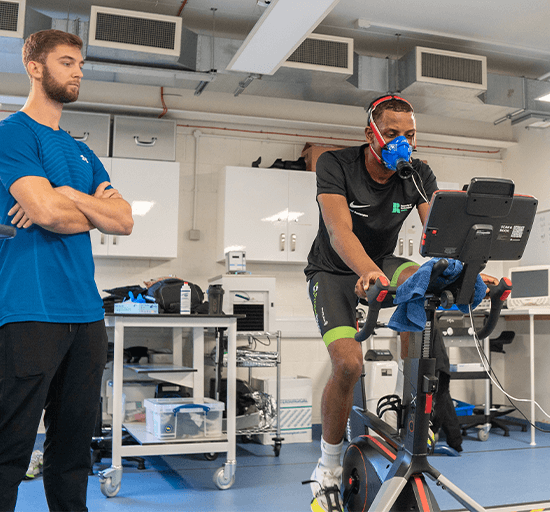
Sport and Exercise Science Pathway: Optimisation of human performance and health in heat through acute (e.g., cooling) and chronic (e.g., acclimation) strategies; metabolic demands during exercise under different environmental conditions.
Healthcare Pathway: Public health interventions for improving diet and lifestyle in specific social groups; studies on perceived stress and sleep quality across different social or professional groups.
Optional according to pathway
Module details: The Independent Study module enables in-depth, tutor-supported study of a chosen topic within the field of Cell and Molecular Medicine. Examples of possible topics include fundamental cellular and molecular processes, disease mechanisms and pathology and advanced diagnostics and Therapeutics. Delivered mainly face-to-face, it includes lectures, seminars, and research involvement. Students access learning resources and personalised feedback, helping them refine their skills and deepen their understanding of the subject matter.
Module details:
The Independent Study module enables in-depth, tutor-supported study of a chosen topic within the field of Conservation and Biodiversity. Example of possible topics include Drivers of Biodiversity Loss and Environmental Change, Conservation Strategies and Solutions, Technologies in Conservation and Conservation Genetics and Genomics. Delivered mainly face-to-face, it includes lectures, seminars, and research involvement. Students access learning resources and personalised feedback, helping them refine their skills and deepen their understanding of the subject matter.
Module details: The Independent Study module enables in-depth, tutor-supported study of a chosen topic within the field of Sports and Exercise Science. Examples of possible topics include Exercise Physiology, Mental Health and Well-being in Elite Athletes and Biomechanics and Injury Prevention. Delivered mainly face-to-face, it includes lectures, seminars, and research involvement. Students access learning resources and personalised feedback, helping them refine their skills and deepen their understanding of the subject matter.
Module details: In this module, you will study approaches to address the growing global burden of neurological diseases, focusing on individual, national, and international perspectives. You will explore biopsychology, neurology, and lifestyle medicine, with an emphasis on preventative strategies in clinical neuroscience. The module will also consider health inequities, cultural perspectives, and the “lived experience” of patients in research design and implementation.
Module details: In this module, you will explore obesity and related cardiometabolic diseases, examining the underlying mechanisms that govern eating behaviour from both physiological and psychological perspectives. You will consider how these mechanisms can be targeted for prevention and treatment. Additionally, you will develop communication skills to effectively engage with different audiences. This module will provide you with a comprehensive understanding of obesity-related health challenges and equip you with strategies to address them through evidence-based interventions and effective communication.
These are the current planned modules on this course and may be subject to change.
Careers
Shape the Future of Applied Sciences.
On graduation, you will be well equipped to pursue a wide range of careers in academia, government, and industry.
You could take on roles developing new products and technologies as a research scientist in universities, research institutes, or laboratories across fields such as:
- Pharmaceuticals
- Biotechnology
- Nutrition
- Healthcare science
- Environmental agencies
Many graduates also choose to continue their studies, pursuing a PhD to further specialise and engage in advanced research.
Learning and assessment
How you’ll learn:
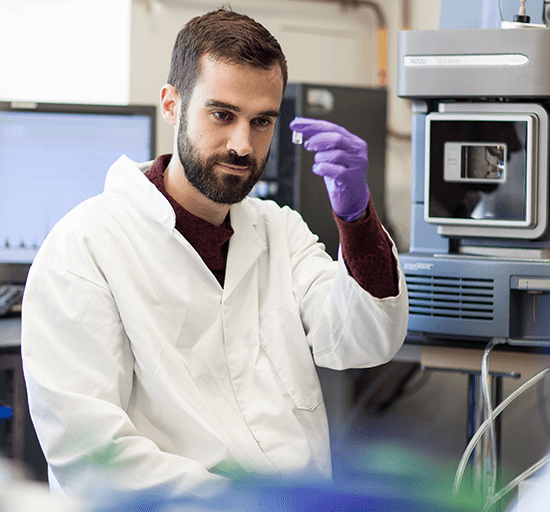
You will learn through a blended approach that combines traditional lectures with hands-on, real-world application. You will undertake an individual research project under the guidance of research-active faculty, allowing you to explore topics in depth while developing rigorous, methodologically sound research skills.
Throughout the programme, you will benefit from personalised mentorship from a primary supervisor and have access to advanced facilities and technical support to support your research.

How you’ll be assessed:
You will be assessed through a variety of real-world assignments designed to develop and evaluate your understanding and practical skills. These include critical analysis reports, oral presentations, paper critiques, written assignments, scientific discussions, and meta-analyses.
You will learn through these assessments, gaining an in-depth understanding of both theory and hands-on application in your chosen pathway, preparing you to take the next step in your career.
Open days
Get a real taste of our campus, community and what it’s like to study at Roehampton
Applying
Full-time UK postgraduate students apply through our direct application system.
This course is also available part-time to UK students.
Specific entry requirements
A relevant 2:2 undergraduate science-based degree is essential. Students without a science-based degree may be eligible upon being interviewed to ensure their capacity to undertake action to acquire sufficient knowledge in the Biosciences or Life and Health Sciences to meet the demands of the programme.
General entry requirements
International undergraduate students apply through our direct application system.
Please note, international students are only eligible to study this programme full-time
Specific entry requirements
A relevant undergraduate science-based degree is essential. Students without a science-based degree may be eligible upon being interviewed to ensure their capacity to undertake action to acquire sufficient knowledge in the Biosciences or Life and Health Sciences to meet the demands of the programme.
International students are assessed based on typically holding a relevant bachelor's degree with 2:2 equivalent from a UK-ENIC (The UK national agency for international qualifications and skills) recognised institution For International students studying in English, the overall average score must be not less than 6.5 IELTS (or equivalent) with no individual section less than 6.0.
General entry requirements
Fees and funding
UK students
Tuition fees
| Entry date | MRes (full-time) | MRes (part-time) |
|---|---|---|
| September 2026 | £11,250 | £5,625 |
Prices shown are for the first year of your degree.
Funding your studies
We also provide other ways to support the cost of living, including on-campus car parking, hardship support and some of the most affordable student accommodation and catering in London.
International students
Tuition fees
| Entry date | MRes |
|---|---|
| September 2026 | £18,980 |
Prices shown are for the first year of your degree.
Funding your studies
We also provide other ways to support the cost of living, including on-campus car parking, hardship support and some of the most affordable student accommodation and catering in London.

Need help or advice before applying?
Life and Health Sciences
Join our diverse Life and Health Sciences community, whose leading academics are dedicated to understanding and improving the living world through ground-breaking advances in scientific research.


