
Duration:
1 year (full-time)
2–4 years (part-time)
Number of credits:
MA: 180
PGDip: 120
PGCert: 60
Start date(s):
September 2026
January 2027
The MA SEND and Inclusive Education is designed to help you develop as a reflective and informed practitioner who can engage critically with education across a range of settings.
Throughout the programme, you will explore how policies, teaching practices and institutional structures shape the experiences of children and young people, particularly those who are disabled, have special educational needs or additional support needs, or who may be at risk of exclusion.
A central focus of the course is understanding what inclusive education looks like in practice. You will examine approaches to curriculum design, teaching and learning, and the role played by families and other adults who support children and young people. You will consider how barriers to participation are created, how they can be challenged, and how more equitable and empowering approaches to education can be developed.
The programme encourages you to explore inclusion within its broader historical, social, political and ethical contexts. You will be supported to question deficit based assumptions, reflect on how educational inequalities arise, and consider how you can contribute to positive change in your own professional environment.
By the end of the course, you will have a deeper understanding of inclusive education and the knowledge needed to advocate for learners who may experience marginalisation or disadvantage.
Did you know?
Teaching is delivered to fit around your existing commitments, with modules taught on weekday evenings and some Saturdays.
The 2023 Complete University Guide ranks Roehampton 2nd in London for research quality in Education.
Modules
Children’s, young peoples’ and young adults’ experiences in education contexts and their capacity to learn, develop and participate, not only depends on their cognitive-conceptual capacities but also on a range of interconnected social-emotional dimensions: perceptions they hold about themselves as a person and as a learner; perceptions of others; the emotions they experience in learning activities and in their social experience and interactions with others (both teachers and other learners). The complexity of the social and emotional dimensions of educational contexts shapes learners’ experiences, engagement and educational progress and effects the development of their wellbeing and mental health.
This module aims to provide students with the opportunity to learn about key issues, perspectives and debates in theory, policy and practice, drawing on literature, their own experiences and other resources, to explore the social-emotional dimensions of both learners themselves and of the educational contexts within which they are learning, developing and participating (institutional and policy). Broad theoretical perspectives are introduced as a basis for understanding social-emotional dimensions of education and wellbeing, the difficulties encountered and experienced by some learners and the possible institutional responses. Students are introduced to different frameworks/perspectives through which social-emotional dimensions are problematized, e.g. the mental illness framework - diagnosis & treatment of disorders; the SEND framework – identification of SEMH difficulties, additional support needs and educational interventions; the development for all framework – enhancing social-emotional literacy learning and development through teaching, learning, curriculum and institutional change.
In the first part of the module (weeks 1-8), a broad foundation for learning and studying the perspectives and issues in inclusion, disability and SEND in education is provided, founded on critical pedagogical principles. It is designed to enable students to gain a broad and critical overview of the field and key issues in inclusive education and SEND both internationally and in the UK, in relation to the education of learners identified as having learning difficulties, disabilities or other related differences, who are vulnerable to marginalization and exclusion. The taught sessions firstly address broad concepts relating to educational difficulty, SEN, disability, and difference, including the historical development of special education and current global perspectives of inclusive education, disability, and difference. Students will be introduced to the idea of the contested meanings and theoretical perspectives involved in inclusion, exclusion and inclusive education policy and practice in the context of critical social and educational struggles for inclusive change, anti-discrimination, human rights and equalities, for groups traditionally marginalized from and within education and society due to their disability and/or perceived ‘inability’ in education and society. The module introduces students to some key contemporary issues as a basis for critical examination and further development of their critical reflection, knowledge and understanding of inclusive education and SEND to be able to apply critical reflection and analysis relating to their own national and local contexts. Students will be enabled to explore the connections between issues, perspectives and debates in theory, policy, and practice, drawing on international literature, their own experiences, and other resources.
In the second part of the module (weeks 9-12), students are introduced to the person-centred principles of social pedagogy, as a resource for analyzing and developing inclusive, person-centred practice enabling them to explore critical incidents that they have been involved in, in relation to the education of a SEND learner. By applying their conceptual learning from the module, they will analyse key dimensions and issues involved in the practice context. Finally, they will identify some specific actions / practice changes that could be initiated in a practice context with which they are familiar (their critical incident context), including actions which they themselves could take.
Autistic children, young people, and young adults experience education in ways that are shaped not only by their cognitive profiles but also by a complex interplay of social, emotional, cultural, and institutional factors. Their capacity to learn, develop, and participate is influenced by how they are perceived by others, how they perceive themselves, and the extent to which educational environments affirm their identities and needs. These experiences are further shaped by diagnostic frameworks, policy discourses, and societal narratives around autism and neurodiversity.
This module provides students with the opportunity to critically explore key issues, perspectives, and debates in theory, policy, and practice relating to autism in education. Drawing on literature, lived experience, and professional contexts, students will examine how autism is understood and responded to within educational settings, and how these responses impact inclusion, wellbeing, and advocacy. The module introduces broad theoretical paradigms including the neurodiversity paradigm, medical and social models of disability, and rights-based approaches as lenses through which to understand autistic experience and educational practice.
Students will engage with diverse frameworks that shape institutional responses to autism, such as:
- The medical/diagnostic framework - focusing on classification, identification, and treatment;
- Government policy frameworks for practice (e.g. the Code of Practice in England);
- Disability equality law, requiring reasonable adjustments and an inclusive approach;
- The SEND framework - addressing special educational needs, SEMH difficulties (social, emotional, and mental health), and targeted support; and
- The neurodiversity and Universal Design for Learning (UDL) framework - promoting inclusive, strengths-based approaches and systemic change.
Through critical appraisal and advocacy-based tasks, students will reflect on the intersectionality of autism (such as, gender, ethnicity, socio-economic status), challenge deficit-based narratives, and co-create inclusive materials that promote understanding and equity. The module encourages students to consider how educational institutions can better support autistic learners through inclusive pedagogies, ethical collaboration, and transformative practice.
The module introduces students to the key issues and dilemmas surrounding research in the broad field of education, while also enabling them to develop a critical understanding of research on policy and practice within their specialist area. The module provides opportunities to engage with the philosophical foundations of educational research and to explore the values, purposes and ethical considerations that underpin research methodologies. Students will also be introduced to and consider the practicalities of planning, conducting and completing a small-scale research study in their specialist area, with an emphasis on common methods of data collection and interpretation that are accessible, relevant and appropriate to students’ needs.
This module, which is cross-listed across the three MA programmes, develops students’ knowledge and understanding of empirically and theoretically based educational research in diverse contexts. The module is designed to cater for a range of students on the MA programmes, many of whom are practicing professionals within educational or early childhood settings. Some students may not yet be practitioners in their fields but will have knowledge and understanding broadly. Moreover, some will have more experience of research than others. This module takes a supportive approach in structuring teaching and learning to scaffold, support and challenge students as needed. Successful completion of the module will provide students with the knowledge, understanding and research tools to enable each student to design and plan their own research project (empirical or theoretical) as part of their Research Project module.
The Research Methods module provides you with an opportunity to research an area of bespoke interest to you within your field of study - Education, Education Leadership and Management or SEND and Inclusive Education* – developing your skills in the design, development, management and delivery of your research project. After developing and honing the research focus for your project, you will work with your supervisor to create the research questions and research design that will underpin the research that you wish to do. Working independently, but in close consultation with your supervisor, you will then carry out the research that you have designed drawing upon key project management skills to move the research from inception to finished product. You will demonstrate your ability to critically analyse, synthesise and make recommendations through the submission of a written dissertation. A key goal of the research project is for you, as a researcher and/or practitioner, to add to the knowledge in the area that you are researching. This knowledge may then be disseminated via your publication in journals, presentation to colleagues or a CPD session in your school or organisation.
Postgraduates, who earn the Master of Arts degree, should have both an advanced and in-depth knowledge and understanding of their field of study, which is underpinned by an appreciation of current practice and scholarly research in the field. Students must be able to demonstrate a critical awareness of issues and developments in their subject area, an understanding of their professional responsibility within the field of study, knowledge of both research integrity and ethics as well as an ability to demonstration reflection and reflexivity as a researcher. These skills will be evidenced in your engagement with the research project, in your Pecha Kucha presentation and in the written dissertation.
*Your project must focus and be clearly linked to an area within the field of your MA degree allowing you to demonstrate in-depth knowledge of an agreed research area.
These are the current planned modules on this course and may be subject to change.
Careers
Graduates of the MA SEND and Inclusive Education progress into a wide range of roles across schools, colleges, local authorities and other education settings.
Many move into positions focused on inclusion, advisory work, teaching support or leadership, and some progress into roles connected to SEND coordination or departmental leadership. While the degree does not provide the formal SENCO qualification, it offers the depth of knowledge needed to support those working in or aspiring to similar responsibilities.
The programme also prepares students for work beyond school settings. Graduates often move into policy, research or project roles within government departments, multi-agency organisations, charities and NGOs that focus on inclusive education and SEND practice. Others develop careers in consultancy, using their understanding of educational systems, equity and inclusion to support organisations and communities.

- Inclusion and SEND support roles in schools and colleges
- Advisory and specialist positions within local authorities
- Leadership and coordination roles within education settings
- Policy, research and project roles within government and NGOs
- Consultancy and professional support roles in education and community organisations
- Academic writing, research and data analysis
- Critical thinking and problem solving
- Interpreting complex policy and practice contexts
- Professional communication and collaborative working
- Confident decision making in complex and sensitive situations
The academic foundation provided by the programme also supports progression into doctoral study and research focused careers.
How you will learn
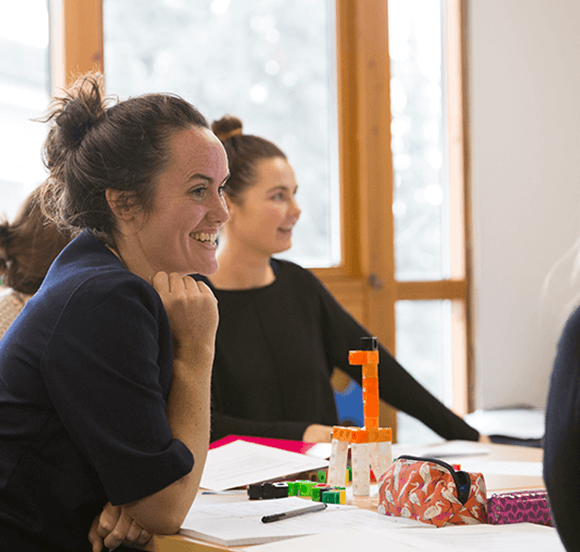
You will learn through a collaborative and discussion-based approach that encourages you to explore complex ideas and apply them to your own professional experience.
Teaching is delivered through lectures, seminars and structured group work that support shared understanding and critical reflection.
Tutors use creative and co-operative learning methods to help you engage with key concepts and feel confident contributing to discussion. Across the programme, you will engage with timely debates and contemporary issues, helping you extend your interests and develop new areas for research.
Support for individual learning needs is embedded throughout the programme. Module leaders provide resources and readings in advance, and tutors work closely with the Disability Coordinator to ensure appropriate guidance and adjustments. Regular Level 7 writing workshops provide additional support as you prepare for your dissertation.
Teaching methods include:
- Lectures, seminars and small group teaching
- Collaborative and co-operative learning activities
- Structured group and paired discussions
- Guided independent study
- Digital resources and recorded content to support flexible learning
Throughout the programme, you will be supported to develop reflective practice, critical thinking and advanced academic skills, preparing you for professional and leadership roles in inclusive education.

How you will be assessed
Assessment on this programme is designed to be authentic, academically rigorous and closely connected to your professional experience.
You will complete a range of assessments, including essays, presentations and research-based tasks, encouraging you to connect theory, practice and your own context.
Formative assessment opportunities are built into every module. You will be able to submit extracts of work for commentary, helping you understand what you are doing well and where you can improve before completing summative assessments.
- Formative feedback on draft extracts to strengthen your final submissions
- Workshops and tutorials that clarify expectations and your understating of academic integrity
- Dissertation workshops to support the development of your research for the dissertation
- Scheduled one to one and group tutorials
- Weekly tutor office hours offering academic support and pastoral guidance
These approaches help you build confidence, develop strong academic skills and meet the demands of Level 7 study.
Open days
Get a real taste of our campus, community and what it’s like to study at Roehampton
Applying
UK postgraduate students apply through our direct application system.
Specific entry requirements
2:2 or higher in a degree with any subject but with relevant practical or professional experience.
General entry requirements
International postgraduate students apply through our direct application system.
Specific entry requirements
2:2 or higher in a degree with any subject but with relevant practical or professional experience.
General entry requirements
Fees and funding
UK students
Tuition fees (full-time)
| Entry date | MA | PGCert | PGDip |
|---|---|---|---|
| September 2026 | £9,250 | £3,085 | £6,170 |
| January 2027 | £9,250 | £3,085 | £6,170 |
Prices shown are for the first year of your degree.
More information about tuition fee costs
Tuition fees (part-time)
| Entry date | MA | PGDip |
|---|---|---|
| September 2026 | £4,625 | £3,085 |
| January 2027 | £4,625 | £3,085 |
Prices shown are for the first year of your degree.
Funding your studies
We also provide other ways to support the cost of living, including on-campus car parking, hardship support and some of the most affordable student accommodation and catering in London.
International students
Tuition fees (full-time)
| Entry date | MA | PGCert | PGDip |
|---|---|---|---|
| September 2026 | £18,890 | £6,328 | £12,657 |
| January 2027 | £18,890 | £6,328 | £12,657 |
Prices shown are for the first year of your degree.
More information about tuition fee costs
Tuition fees (part-time)
| Entry date | MA | PGDip |
|---|---|---|
| September 2026 | £9,490 | £6,328 |
| January 2027 | £9,490 | £6,328 |
Prices shown are for the first year of your degree.
Funding your studies
We also provide other ways to support the cost of living, including on-campus car parking, hardship support and some of the most affordable student accommodation and catering in London.

Need help or advice before applying?
Education
The School of Education is renowned for its high-quality teaching and research, and is one of the principal teacher training providers in the UK.


