
Duration:
MSc: 1 year (full-time) or 2 years (part-time)
PGDip: 1 year (full-time) or 2 years (part-time)
PGCert: 2 years (part-time)
Please add an additional year if undertaking Professional Experience Year
Number of Credits:
MSc: 180
PGDip: 120
PGCert: 60
Start date(s):
September 2026
January 2027
Learn how to improve health and wellbeing through evidence-based nutrition and gain the skills and professional experience you need to make an impact.
In a rapidly evolving world, this programme equips you with professional knowledge while exploring real-life applications of clinical nutrition, preparing you for a diverse range of careers.
You’ll gain a solid foundation in applying nutrition science to prevent and treat health issues and address global challenges, such as:
- Malnutrition, obesity and cardiometabolic disorders
- Health inequalities and inclusive clinical practice
- Environmental sustainability and food systems
You’ll also gain industry-recognised credentials to boost your employability, including eligibility for registration as an Associate Nutritionist with the Association for Nutrition (AfN).
You’ll become a confident practitioner with the ability to communicate nutrition advice effectively to a wide range of audiences.
As your skills grow, you’ll develop insight into research, critical evaluation, and evidence-based practice – everything you need to influence nutrition care locally and globally.
Through our MSc Clinical Nutrition, you will gain the knowledge, practical experience, and professional competencies to enhance your career, prepare for real-world clinical settings, and make a meaningful difference in health and nutrition outcomes.
This course has entry points in January and September. See our Applying section for how to apply.
Did you know?
On this programme, you’ll explore digital health technologies and develop skills in collecting and analysing clinical nutrition data, giving you expertise valued by employers in healthcare, research and nutrition practice.
Accreditation
This course is proudly accredited by the Association for Nutrition (AfN).
This accreditation confirms that the course meets the high professional standards set by the nutrition industry, ensuring you receive a credible and comprehensive education.
Graduates are eligible to join the UK Voluntary Register of Nutritionists (UKVRN) as Registered Associate Nutritionists without the need for additional assessments. This provides a direct route to professional recognition and supports your progression in the field of nutrition and health.
AfN accreditation is a mark of quality, recognised and respected by employers across the health sector. It demonstrates that your degree delivers the knowledge and skills required for a successful, sustainable career.
It also connects you with a wider professional community, offering valuable networking opportunities and supporting your continued development within the industry.

Modules
Module details: In this module, you will explore nutrients, their digestion, absorption, and functions in human physiology. Metabolic pathways and their adaptations in various physiological states will be examined. The significance of sustainable diets and novel foods in global health will be discussed. You will develop practical skills in nutritional analysis techniques, enhancing your ability to assess dietary components. This module provides a comprehensive understanding of human nutrition, equipping you with essential knowledge for addressing contemporary health challenges through diet and metabolism.
Module details: In this module, you will gain an in-depth understanding of malnutrition and recent advances in nutrition interventions for clinical conditions. Content is informed by research studies, international guidelines, and clinical practice, delivered by expert academics and practising clinicians. Case studies will reflect the multicultural world we live in, focusing on evidence-based, person-centred care. This module will enhance your ability to apply nutritional knowledge in clinical settings, preparing you to address diverse healthcare challenges with a research-driven and patient-focused approach.
Module details: In this module, you will explore obesity and related cardiometabolic diseases, examining the underlying mechanisms that govern eating behaviour from both physiological and psychological perspectives. You will consider how these mechanisms can be targeted for prevention and treatment. Additionally, you will develop communication skills to effectively engage with different audiences. This module will provide you with a comprehensive understanding of obesity-related health challenges and equip you with strategies to address them through evidence-based interventions and effective communication.
Module details: In this module, you will develop critical thinking skills to interpret scientific research effectively and apply it for research in the topic of your studies. You will collect a set of data using methods commonly employed in scientific research settings, conduct data analysis, and evaluate the strengths and limitations of these techniques. This module will enhance your ability to assess research critically and apply data-driven insights to research questions, preparing you for evidence-based decision-making.
Module details: In this module, you will collect data for three research projects, designed to develop your skills and broaden your knowledge. With lecturer-led guidance, you will engage in data collection and analysis, enhancing your research capabilities. You will select one project to present as both a scientific paper and a poster, strengthening your ability to communicate research findings effectively. This module will equip you with essential research skills, preparing you for evidence-based practice and scientific dissemination in nutrition and health.
These are the current planned modules on this course and may be subject to change.
Professional Experience Year
This course also offers the option of a Professional Experience Year. This programme combines dynamic career modules with flexible placement opportunities. After completing your first year of study, you'll then spend the next academic year completing your Professional Experience training as part of your degree. This will give you real career experience. This unique opportunity offers you distinct paths to build your expertise.
This compulsory module provides a common academic foundation for all PEY students. It focuses on career development, professional communication, workplace expectations, collaboration, digital capability, professional behaviours and reflective practice.
Following successful completion of Career and Professional Immersion, students will progress to one of two 30-credit professional experience modules:
- Professional Placement
- Group Internship Experience
Students undertake a minimum 30-week professional placement within an approved external organisation. The module focuses on sustained professional practice, application of postgraduate knowledge and skills, professional responsibility, workplace contribution, feedback and critical reflection.
Students undertake two sequential structured group internships across the professional experience period, responding to authentic organisational or industry challenges. The module focuses on collaborative professional practice, project management, research and analysis, client/stakeholder engagement, development of professional outputs, feedback and critical comparison of learning across the two internship experiences.
Careers
Our Clinical Nutrition MSc is designed with input from employers, graduates and current students, ensuring you gain practical skills that can be applied to real-world scenarios.
Graduates from Roehampton go on to a wide range of careers, including:
- Nutritionist in the public sector, private commercial settings, or independent practice
- Public health nutritionist
- Academic research and teaching
- Commercial research
- NHS roles across various specialities
- Local and central government positions in policy and health promotion
Many students also join the programme as established health professionals seeking career development and specialisation.
Students pursue this MSc for a variety of reasons: healthcare professionals such as doctors, pharmacists, or nurses specialising in clinical nutrition; international dietitians aiming to register with the HCPC and practise in the UK; or individuals seeking careers as registered nutritionists in healthcare, research, industry or freelance practice.

Learning and Assessment
How you’ll learn:
You will learn through a blend of interactive lectures, seminars, practical sessions, workshops, and real-world case-based activities designed to build your skills, knowledge, and confidence.
You will engage in group discussions, problem-solving tasks, debates, and self-reflection, while practical sessions will give hands-on experience in areas such as assessing body composition and preparing modified texture meals.
You will also benefit from online resources, including videos, quizzes, and podcasts, to support independent learning and digital skills. Expert guest lecturers will share real-world insights and career guidance, and you will have opportunities to connect with the research and professional community to enhance your learning and future employability.


How you’ll be assessed:
You will be assessed through a mix of practical reports, case-study tasks, oral presentations, in-class tests, and self-reflections, all designed to develop your assessment literacy and prepare you for professional practice.
Clear marking criteria, exemplar work, and support sessions will guide you in meeting expectations and using research ethically, including guidance on generative AI. Early assignments will focus on selecting, analysing, and communicating current research to build evidence-based practice skills.
You will apply these skills in workshops and in your Research Project(s), which include group work and data collection. Assessments are designed to be authentic and meaningful, helping you demonstrate teamwork, communication, and real-world problem-solving to future employers.
Hands-on learning in world-class facilities
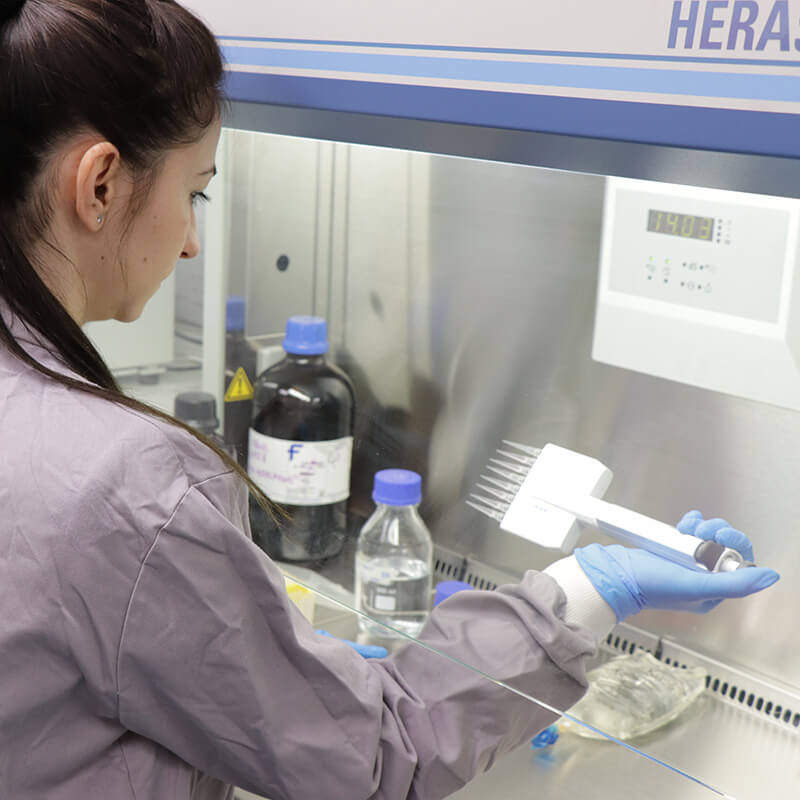
Our Nutrition facilities are designed to support hands-on learning and cutting-edge research.
Based at Whitelands College, a stunning listed building next to Richmond Park, you’ll have access to specialist food laboratories, clinical study suites, and advanced nutrition and biochemical analysis facilities.
Open days
Get a real taste of our campus, community and what it’s like to study at Roehampton
Applying
UK postgraduate students apply through our direct application system.
Specific entry requirements
2:2 undergradute degree.
If lower, experience will be reviewed by an RNutr academic
A recent, relevant undergraduate science-based degree is desirable, however, students without a science-based degree may be eligible, but may need to undertake action to ensure a sound underpinning knowledge in the biosciences to meet the demands of the accredited programme.
General entry requirements
International postgraduate students apply through our direct application system.
Specific entry requirements
2:2 undergradute degree.
If lower, experience will be reviewed by an RNutr academic
A recent, relevant undergraduate science-based degree is desirable, however, students without a science-based degree may be eligible, but may need to undertake action to ensure a sound underpinning knowledge in the biosciences to meet the demands of the accredited programme.
For International students studying in English, the overall average score must be not less than 6.5 IELTS (or equivalent) with no individual section less than 6.0.
General entry requirements
Fees and funding
UK students
Tuition fees (full-time)
| Entry date | MSc | PGCert | PGDip |
|---|---|---|---|
| September 2026 | £11,250 | £3,750 | £7,500 |
| January 2027 | £11,250 | £3,750 | £7,500 |
Prices shown are for the first year of your degree.
More information about tuition fee costs
Tuition fees (part-time)
| Entry date | MSc | PGCert | PGDip |
|---|---|---|---|
| September 2026 | £5,625 | £1,875 | £3,750 |
| January 2027 | £5,625 | £1,875 | £3,750 |
Prices shown are for the first year of your degree.
Professional Experience Year
Students enrolled on programmes including a Professional Experience Year will be charged a tuition fee for the Professional Experience Year. For students commencing the Professional Experience Year during the 2026/27 academic year, this fee is £2,500.
Tuition fees are reviewed annually and may be subject to change in subsequent academic years in accordance with the University’s Student Fee Payment and Enrolment Regulations.
Funding your studies
We also provide other ways to support the cost of living, including on-campus car parking, hardship support and some of the most affordable student accommodation and catering in London.
International students
Tuition fees (full-time)
| Entry date | MSc | PGCert | PGDip |
|---|---|---|---|
| September 2026 | £18,980 | £6,328 | £12,657 |
| January 2027 | £18,980 | £6,328 | £12,657 |
Prices shown are for the first year of your degree.
More information about tuition fee costs
Tuition fees (part-time)
| Entry date | MSc | PGCert | PGDip |
|---|---|---|---|
| September 2026 | £9,490 | £3,164 | £6,328 |
| January 2027 | £9,490 | £3,164 | £6,328 |
Prices shown are for the first year of your degree.
Professional Experience Year
Students enrolled on programmes including a Professional Experience Year will be charged a tuition fee for the Professional Experience Year. For students commencing the Professional Experience Year during the 2026/27 academic year, this fee is £2,500.
Tuition fees are reviewed annually and may be subject to change in subsequent academic years in accordance with the University’s Student Fee Payment and Enrolment Regulations.
Funding your studies
We also provide other ways to support the cost of living, including on-campus car parking, hardship support and some of the most affordable student accommodation and catering in London.

Need help or advice before applying?
Life and Health Sciences
Join our diverse Life and Health Sciences community, whose leading academics are dedicated to understanding and improving the living world through ground-breaking advances in scientific research.


