Duration:
1 year (full-time)
Number of credits:
180
Start date(s):
September 2027
Studio practice for AI in the creative industries
MA AI and Digital Media is a studio-based, practice-led master’s designed for graduates and career changers who want to build creative, future-facing skills for evolving media industries.
Artificial intelligence is reshaping how creative work is developed, produced and experienced. This programme enables you to explore these changes through hands-on studio practice, critical enquiry and professional project development.
Learning takes place through studio projects, experimentation, prototyping and live or industry-inspired briefs rather than narrow training in specific software. Alongside practical production, you will consider questions of authorship, creativity and digital culture while developing work that responds to contemporary media practice.
Teaching is supported by Roehampton’s specialist creative facilities, including the Media Centre. Based on a London campus connected to cultural and creative activity, the course supports the development of both professional confidence and intellectual understanding.
A major final project enables you to produce a substantial creative, applied or consultancy-focused outcome.

Why this course
This is a practice-led master’s for students who want to work creatively, professionally and responsibly with AI in digital media.
You will develop portfolio-ready work through studio production, experimentation and project-based learning. The programme combines creative making with critical engagement, supporting exploration of how artificial intelligence is influencing authorship, labour, innovation and production across the creative industries.
With its professional focus, cross-media experimentation and final public showcase, the course prepares you for emerging opportunities in AI-enabled media and creative roles, such as digital content creator, digital designer, digital media artist, AI consultant, creative change consultant, project and workflow manager, and AI governance and compliance advisor.
- Studio-based learning through making and experimentation
- Focus on creative production rather than computer science
- Engagement with live briefs and industry-facing project work
- Exploration of authorship, ethics and innovation in digital culture
- Development of portfolio work and a final showcase
Modules
Explore how stories are created and shared across digital platforms.
You’ll develop your creative practice across formats including video, audio, image and interactive media, working from initial ideas through to finished outputs in a studio-based environment. You’ll consider how stories are shaped for different audiences and platforms, while building practical skills in visual, audio and screen-based production.
Assessment includes a pitch and a digital storytelling project.
Develop a practical approach to solving creative and professional challenges. You’ll explore how to frame problems, understand audiences and generate ideas, using methods such as research, ideation and prototyping, alongside the integration of agentic AI in workflows. The module combines creative experimentation with strategic thinking, helping you shape ideas into clear, workable responses to complex briefs. Assessment includes a project pitch and a portfolio.
Examine how creative work is evolving in a changing digital landscape. You’ll explore key debates around how AI affects the concepts of authorship, ownership and creative practice, alongside the legal, ethical and economic contexts shaping the creative industries. Through critical discussion and studio activity, you’ll reflect on how new technologies are influencing creative production and professional practice. Assessment includes a portfolio and a written manifesto.
Work on a live brief set by an external organisation.
You’ll respond to a real-world challenge, developing a creative outcome that meets the needs of a client and audience. Working in a studio setting, you’ll build experience in research, idea development and production, creating work that reflects current industry practice.
Assessment includes a proposal and a final project portfolio.
Complete a substantial independent project that reflects your interests and goals.
You’ll take your project from initial idea through research, development and final production, supported by academic supervision. Your work may be written, creative or practice-based, allowing you to focus on an area that aligns with your future ambitions.
Assessment includes a research brief and a final project.
Careers
Graduates will be prepared for roles across digital media, creative production and emerging AI-informed industries.
You will complete the programme with a portfolio of practical work and an understanding of contemporary media practice, supporting entry into roles such as:
- AI content producer
- Creative technologist
- Digital media strategist
- Social media and audience engagement manager
- AI-assisted digital marketing executive
- Content designer for emerging platforms
- Creative project manager
- Media researcher specialising in digital culture and AI

The Student Futures team is here to support you throughout your time at Roehampton and beyond.
They offer services tailored to your needs, helping you take confident steps towards your future.
You’ll have access to a wide range of career workshops and events, where you can engage with employers and develop the skills you need to succeed in the workplace.
These opportunities will help you build your CV, prepare for interviews, and connect with successful Roehampton graduates who are thriving in their careers. You’ll also be able to engage with our partners across London and beyond.
Wherever you want to go in the future, you'll be preparing for the world of work from your very first day.
#1 in London for postgraduate students
WhatUni Student Choice Awards 2026
Learning & assessment
How you'll learn
Learning is centred on studio practice supported by seminars, workshops and group critique. You will develop projects through experimentation, collaboration and reflective production processes.
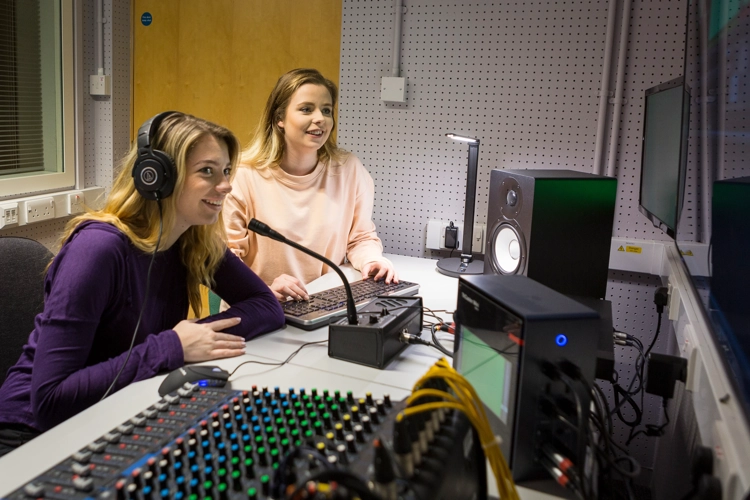
Project-based learning and live briefs enable engagement with real creative challenges while building a professional portfolio. Teaching takes place in Roehampton’s specialist media spaces, including the Media Centre.

How you'll be assessed
Assessment reflects contemporary creative practice and may include:
- Studio projects and digital portfolios
- Presentations and collaborative assignments
- Critical essays and reflective writing
- Practical production work
- A final independent project or dissertation
These approaches enable you to demonstrate both creative achievement and critical engagement with current issues in digital media.
Open days
Get a real taste of our campus, community and what it’s like to study at Roehampton
Applying
Full-time UK postgraduate students apply through our direct application system.
Course subject to curriculum review and validation.
Entry tariff
General entry requirements
International undergraduate students apply through our direct application system.
Course subject to curriculum review and validation.
Entry tariff
General entry requirements
Fees and funding
UK students
Tuition fees
| Entry date | MA |
|---|---|
| September 2026 | £11,250 |
Prices shown are for the first year of your degree.
Funding your studies
We also provide other ways to support the cost of living, including on-campus car parking, hardship support and some of the most affordable student accommodation and catering in London.
International students
Tuition fees
| Entry date | MA |
|---|---|
| September 2026 | £18,980 |
Prices shown are for the first year of your degree.
Funding your studies
We also provide other ways to support the cost of living, including on-campus car parking, hardship support and some of the most affordable student accommodation and catering in London.

Need help or advice before applying?
Arts, Humanities and Social Sciences
Integrating the creative dynamism of arts and digital industries with the deep-rooted traditions of humanities and social sciences.