
Duration:
1 year (full-time)
Please add an additional year if undertaking Professional Experience Year
Number of credits:
MSc – 180
Start date(s):
September 2026
September 2027
Develop the digital, data-driven, and leadership skills that construction employers are looking for and apply them in real-world projects.
This MSc is designed for graduates and early- to mid-career professionals aiming to progress into construction project management roles in the UK and internationally. The programme provides a structured, practical approach, helping you build confidence and competence in a supportive learning environment.
You’ll gain hands-on experience, work on real projects, and complete a capstone research, innovation and enterprise project that demonstrates your expertise to future employers.
The curriculum covers all core aspects of construction project management and reflects contemporary industry practice. You’ll study four compulsory modules, focusing on:
- Sustainable construction
- Managing risk and uncertainty using data-driven solutions
- Professional and ethical project management
- BIM and other digital tools for project management
The capstone project allows you to apply research, analytical, and entrepreneurial skills to a contemporary construction challenge, producing innovative solutions that are directly relevant to the industry.
Every element of the course is designed to develop practical knowledge, digital competence, and strategic thinking, preparing you to manage complex construction projects in diverse contexts.
By the time you graduate, you’ll be a confident, digitally capable construction project manager, ready to lead projects, make data-informed decisions, and deliver innovative, sustainable solutions in a fast-evolving industry.
Accreditation
We will be seeking accreditation by the Chartered Institute of Building (CIOB), the Association of Project Management (APM), and the Royal Institution of Chartered Surveyors (RICS).
Accreditation ensures the programme meets the highest professional standards in construction project management. It is particularly valuable for those aspiring to formal recognition and career advancement in the industry.
Modules
In this module you will explore the key processes, practices and challenges involved in delivering construction, civil engineering and infrastructure projects in the UK and international contexts. You will examine procurement strategies, contractual arrangements, cost management, cashflow considerations and dispute resolution processes that influence project success. Through applied case studies and scenario-based learning, you will evaluate project delivery approaches and respond to complex real-world challenges. You will also develop commercial awareness, critical decision-making skills and an understanding of how organisational, regulatory and market conditions shape project outcomes in diverse engineering and construction environments.
Module overview:
As engineering professionals, you will need to integrate sustainability into your decision making process and this module will equip you with the knowledge, analytical tools and critical thinking skills necessary to assess and implement sustainable engineering solutions.
You will explore core sustainability concepts, including the triple bottom line, life cycle assessments (LCAs), and environmental impact assessments (EIAs), as well as practical applications in areas such as low-carbon materials, renewable energy, sustainable water management, and circular economy principles. Emphasis is placed on standards and certification systems (eg BREEAM, LEED, Passivhaus), regulatory frameworks, and industry best practices.
By critically evaluating the economic, social, and environmental impacts of engineering projects, you will develop the ability to assess sustainability performance using established methodologies and propose alternative solutions that enhance environmental outcomes.
You will also examine the future of sustainability, with the increasing impact of climate change and inevitability of the increase in regulation, anticipating emerging challenges and the role of engineers in shaping a more sustainable world.
How you'll learn:
This module consists of lectures, seminars and small group tutorials. The learning will be authentic, and problem based, promoting active learning. Lectures provide conceptual frameworks around sustainability and assessment methodologies, whilst seminars encourage group discussions, problem solving exercises and applied coursework activities.
In this module you will explore the core principles and practices involved in managing complex construction, civil engineering and infrastructure projects. You will examine project lifecycles, organisational structures, governance approaches and financial frameworks that influence project delivery and decision-making. Through case studies and practical activities, you will investigate project management methodologies, procurement strategies, stakeholder engagement and risk management across diverse project environments. You will also develop leadership and critical decision-making skills, enabling you to evaluate complex project challenges and build the strategic understanding required for effective professional practice in engineering and construction sectors.
Module overview:
This module requires you to work on a contemporary research project which strikes a balance between academic research and real-world problem-solving, ensuring you will develop the qualitative and quantitative research skills needed for the industry, whilst also improving communication skills and the use of technology.
How you'll learn:
You will be guided in the process of research from a social science perspective and research methods, which will be taught through lectures and small group workshops. The research project is based on independent research and learning, guided by academic supervision. There will also be opportunities for peer learning and formative feedback.
These are the current planned modules on this course and may be subject to change.
Professional Experience Year
This course also offers the option of a Professional Experience Year. This programme combines dynamic career modules with flexible placement opportunities. After completing your first year of study, you'll then spend the next academic year completing your Professional Experience training as part of your degree. This will give you real career experience. This unique opportunity offers you distinct paths to build your expertise.
This compulsory module provides a common academic foundation for all PEY students. It focuses on career development, professional communication, workplace expectations, collaboration, digital capability, professional behaviours and reflective practice.
Following successful completion of Career and Professional Immersion, students will progress to one of two 30-credit professional experience modules:
- Professional Placement
- Group Internship Experience
Students undertake a minimum 30-week professional placement within an approved external organisation. The module focuses on sustained professional practice, application of postgraduate knowledge and skills, professional responsibility, workplace contribution, feedback and critical reflection.
Students undertake two sequential structured group internships across the professional experience period, responding to authentic organisational or industry challenges. The module focuses on collaborative professional practice, project management, research and analysis, client/stakeholder engagement, development of professional outputs, feedback and critical comparison of learning across the two internship experiences.
Careers
This programme is designed with your future in mind.
It is closely aligned to the competencies required by leading professional bodies and has a strong vocational focus, ensuring you graduate with skills that are directly relevant to industry.
You will be prepared for roles such as:
- Construction project management
- Project management support within contracting organisations or consultancies
- Client-side project coordination
- Public sector project management
- BIM management
With your blend of technical knowledge, leadership skills, and digital project delivery expertise, you could manage complex construction projects, work with contractors to deliver infrastructure and engineering programmes, or take on client-side or consultancy roles overseeing project planning and delivery.

The Student Futures team is here to support you throughout your time at Roehampton and beyond.
They offer services tailored to your needs, helping you take confident steps towards your future.
You’ll have access to a wide range of career workshops and events, where you can engage with employers and develop the skills you need to succeed in the workplace.
These opportunities will help you build your CV, prepare for interviews, and connect with successful Roehampton graduates who are thriving in their careers. You’ll also be able to engage with our partners across London and beyond.
Wherever you want to go in the future, you'll be preparing for the world of work from your very first day.
#1 in London for postgraduate students
WhatUni Student Choice Awards 2026

Learning and Assessment
How you’ll learn:
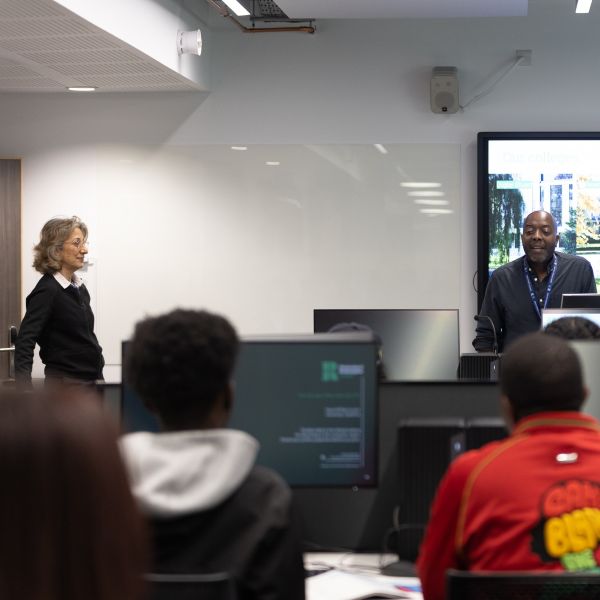
You will learn through a mix of lectures, seminars, practical workshops, and guided independent study, all designed to help you apply theory to real-world practice. Learning activities encourage critical thinking, problem solving, and collaboration within a diverse student cohort. You will also have opportunities to engage with industry through guest speakers, case studies, site visits, and collaborative projects, giving you first-hand experience of contemporary construction project management.
How you’ll be assessed:
Assessment combines individual and group-based tasks, helping you develop independent learning alongside teamwork, leadership, and professional skills. Methods are designed to reflect industry practice and test both academic knowledge and applied problem solving. The 60-credit capstone project allows you to choose between a consultancy-focused project, an entrepreneurial project, or an applied research project, with flexibility in the format of your output, such as a strategic proposal, reflective log, or presentation. This approach ensures you graduate with evidence of practical expertise ready for the workplace.
Hands-on learning in state-of-the-art facilities
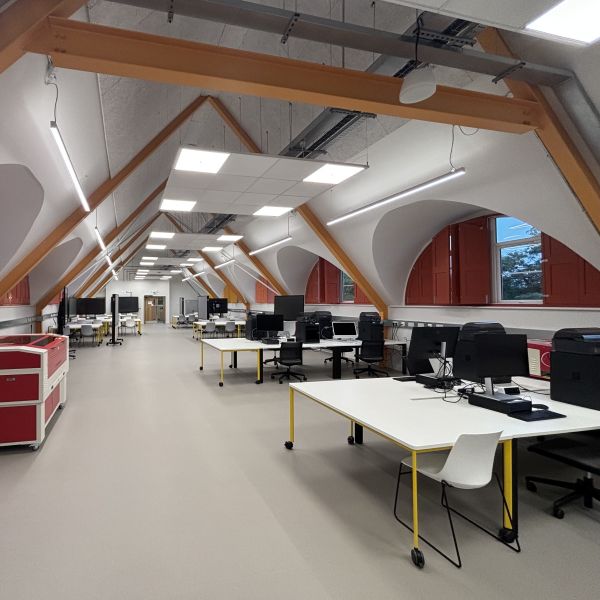
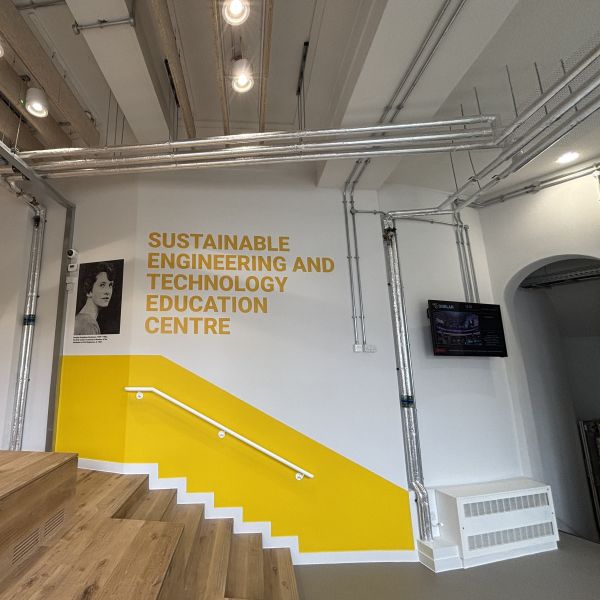
Based at the Dorothy Buchanan Building, a modern hub for learning and innovation, you’ll have access to a range of specialist facilities designed for practical, hands-on learning.
The building features project studios, digital and environmental laboratories, an engineering and fabrication workshop, a CAD suite, and creative breakout spaces.
These resources give you the space and equipment to experiment, design, and develop solutions to real-world challenges across sustainability, computing, and the built environment.
Open days
Get a real taste of our campus, community and what it’s like to study at Roehampton
Applying
UK postgraduate students apply through our direct application system.
Specific entry requirements
2:2 or above in built environment related subject, or equivalent work and professional experience assessed on an individual basis.
General entry requirements
International postgraduate students apply through our direct application system.
Specific entry requirements
2:2 or above in built environment related subject, or equivalent work and professional experience assessed on an individual basis.
General entry requirements
Fees and funding
UK students
Tuition fees
| Entry date | MSc |
|---|---|
| September 2026 | £11,250 |
Prices shown are for the first year of your degree.
Professional Experience Year
Students enrolled on programmes including a Professional Experience Year will be charged a tuition fee for the Professional Experience Year. For students commencing the Professional Experience Year during the 2026/27 academic year, this fee is £2,500.
Tuition fees are reviewed annually and may be subject to change in subsequent academic years in accordance with the University’s Student Fee Payment and Enrolment Regulations.
Funding your studies
We also provide other ways to support the cost of living, including on-campus car parking, hardship support and some of the most affordable student accommodation and catering in London.
International students
Tuition fees
| Entry date | MSc |
|---|---|
| September 2026 | £18,980 |
Prices shown are for the first year of your degree.
Professional Experience Year
Students enrolled on programmes including a Professional Experience Year will be charged a tuition fee for the Professional Experience Year. For students commencing the Professional Experience Year during the 2026/27 academic year, this fee is £2,500.
Tuition fees are reviewed annually and may be subject to change in subsequent academic years in accordance with the University’s Student Fee Payment and Enrolment Regulations.
Funding your studies
We also provide other ways to support the cost of living, including on-campus car parking, hardship support and some of the most affordable student accommodation and catering in London.

Need help or advice before applying?
Computing, Engineering, and the Built Environment
Join a vibrant community where we shape sustainable future through innovation, collaboration, and real-world impact.


